Deciding whether to renovate or move depends on your financial situation, lifestyle goals, and local factors. If renovations boost your home’s value without substantially raising taxes or disrupting your life, they can be a smart choice. However, if your current home no longer meets your needs or offers better school districts, relocating might be better, despite move costs. To weigh these options carefully and uncover key considerations, explore the details below.
Key Takeaways
- Consider renovation if your current home meets your needs and local taxes are manageable; move if better schools or neighborhoods are desired.
- Evaluate hidden renovation costs versus moving expenses, including closing fees, furnishings, and potential property tax increases.
- Choose to renovate when upgrades can enhance property value without significantly raising taxes; move if a different location offers better amenities or schools.
- Account for renovation timeline and disruption versus the quicker process of relocating, depending on your urgency and flexibility.
- Base your decision on personal preferences for space, community, and lifestyle, balancing financial impact with quality of life improvements.
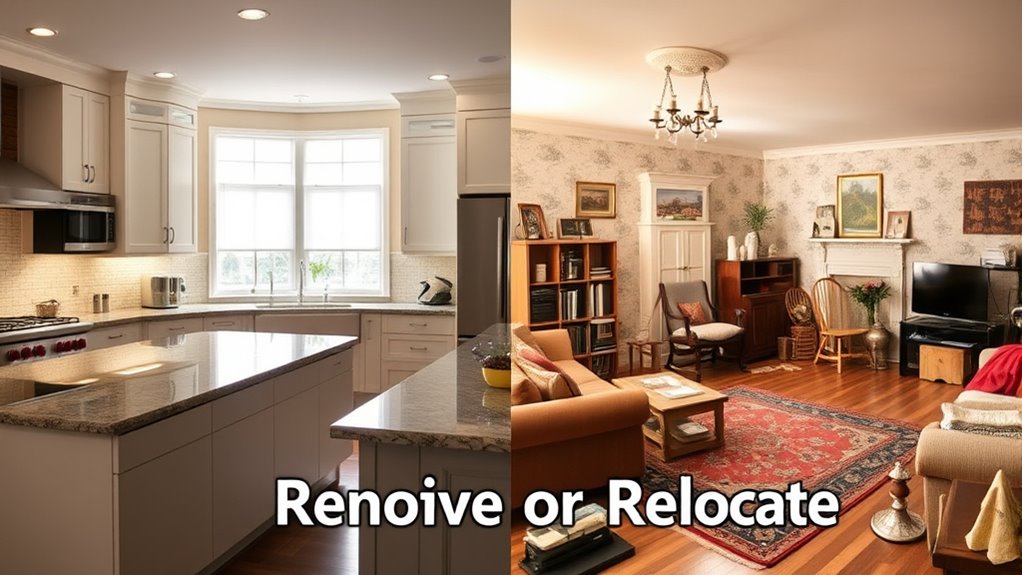
Are you torn between renovating your current home or moving to a new one? Deciding whether to upgrade or relocate depends on several factors, and understanding these can help you make the best choice. One of the key considerations is how your decision will impact your finances, especially property taxes. When you overhaul your home, your property taxes might increase if the renovations substantially boost its value. This could mean higher annual costs, so it’s essential to check how local tax assessments work in your area. If you’re considering moving, keep in mind that property taxes vary widely depending on the location. Moving to a different city or county could mean paying more or less in property taxes, which directly affects your budget.
Another critical factor is the quality of school districts if you have or plan to have children. If your current home is in a district that no longer meets your expectations, relocating might be a better option. A change in school districts can dramatically influence your child’s education and overall quality of life. Conversely, if your home is in a district with excellent schools, renovating could be a more practical choice, especially if you love your neighborhood and community. Renovations can help you create a space that suits your needs without losing the benefits of a good school district.
Choosing to relocate or renovate often hinges on the quality of local schools and community benefits.
Cost analysis plays an essential role in this decision. Renovating might seem more affordable initially, but it can sometimes uncover hidden costs, like structural issues or outdated wiring, that push expenses higher. Moving involves upfront costs such as closing fees, moving expenses, and potential new furnishing, but it might also result in a more considerable change in your financial future if you find a home with better features or lower taxes. Think about what you truly want—are you looking for more space, better amenities, or a different neighborhood?
The timeline is also worth considering. Renovations typically take months and can disrupt your daily routine, while moving can be quicker or slower depending on how prepared you are. If your current home doesn’t meet your needs and renovation costs are escalating, relocating could be the more efficient solution. On the other hand, if you’re attached to your community, your current home’s layout can be customized to fit your lifestyle, making renovation a compelling option. Ultimately, balancing the financial implications, school district quality, and your personal preferences will guide you toward the right decision. Additionally, considering the impact of home theater projectors or other upgrades can enhance your quality of life whether you decide to stay or move.
Frequently Asked Questions
How Do I Estimate Renovation Costs Accurately?
To estimate renovation costs accurately, start by setting a clear renovation budget. Then, create a detailed cost breakdown that includes materials, labor, permits, and unexpected expenses. Research local prices and get multiple quotes from contractors to guarantee your estimates are realistic. Keep some buffer for surprises, and review your budget regularly as plans evolve. This approach helps you avoid surprises and stay on track financially.
What Are the Tax Implications of Selling My Home?
When selling your home, you should consider tax implications like capital gains tax if the profit exceeds the exemption limits. You might qualify for tax deductions if you’ve made improvements or used the home for business purposes. Keep detailed records of renovations and expenses, as they can reduce taxable gains. Consult a tax professional to make sure you’re maximizing deductions and minimizing capital gains taxes legally.
How Can I Determine if My Neighborhood Is Declining?
You can tell your neighborhood is declining when property values plummet like a roller coaster and community investment dries up faster than a desert in summer. Keep an eye on crime rates, local development projects, and the condition of homes around you. If new businesses vanish and streets become neglected, it’s a clear sign of neighborhood decline. Staying informed helps you decide if it’s time to upgrade your home or consider moving on.
What Permits Are Needed for Major Renovations?
You’ll need building permits for major renovations like adding rooms or altering structural elements. Check with your local government to comprehend specific requirements, as permits vary by project scope. Also, review zoning regulations to ensure your plans conform with height, setback, and land use rules. Securing the necessary permits before starting work prevents fines and delays, ensuring your renovation is legal and safe.
How Does Future Market Value Influence My Decision?
Think of your home as an investment seed; its future appreciation shapes your decision. If remodeling boosts resale value and promises solid future appreciation, it’s worth the effort. However, if the market edge favors moving, and your property’s resale value is stagnant, relocating might be smarter. Keep an eye on market trends—your home’s future market value is the compass guiding whether to invest in renovations or seek a fresh start.
Conclusion
Ultimately, whether you choose to renovate or relocate, think of your home as a garden. Sometimes, you need to trim and nurture what’s already there to let it bloom anew. Other times, you must uproot and plant yourself somewhere fresh, where new roots can grow. Trust your instincts, weigh your dreams, and remember—your perfect haven is out there, waiting to be uncovered or cultivated. The choice is yours to make, so take that brave step forward.