
Standing desks paired with ergonomic accessories are definitely worth the investment if you use them properly. They can improve your posture, reduce discomfort, and encourage movement throughout your day, which benefits your overall health. While standing all day isn’t ideal, combining adjustable desks with supportive tools helps create a sustainable workspace. To maximize these benefits and avoid pitfalls, understanding how to set up your station correctly is key—there’s more to explore on this topic.
Key Takeaways
- Properly used, standing desks improve posture and reduce health risks associated with prolonged sitting.
- Ergonomic accessories enhance comfort and support, maximizing the benefits of standing desks.
- Standing desks are effective when combined with movement and sit-stand routines, not as a standalone solution.
- Investing in adjustable desks and accessories promotes long-term health and workplace comfort.
- Without proper setup and habits, standing desks may be ineffective or cause discomfort, highlighting the importance of ergonomic practices.

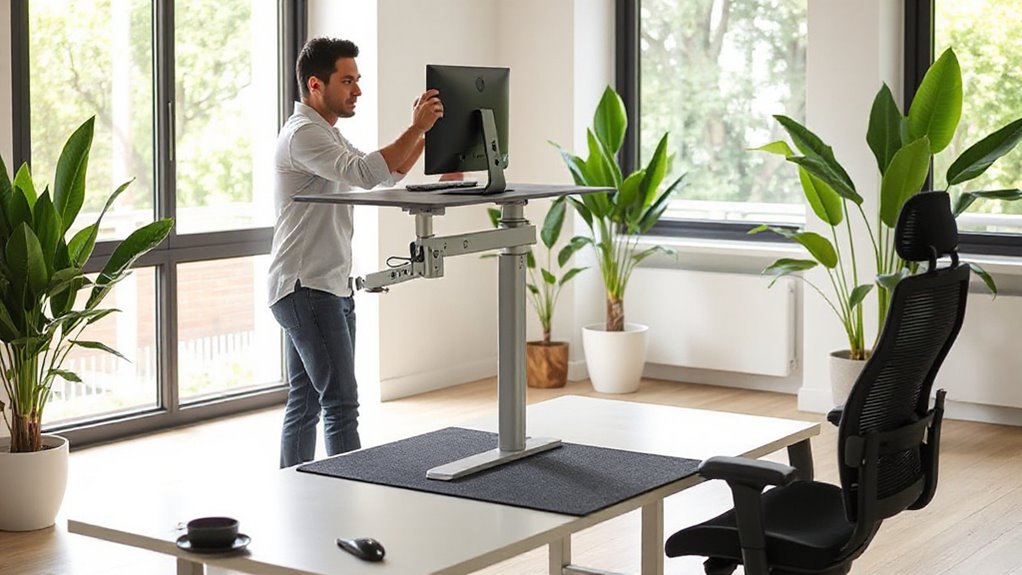
Standing desks have become a popular solution for enhancing workplace ergonomics and promoting better posture. They’re often marketed as a way to combat the negative health effects of prolonged sitting, which many experts now recognize as a significant risk factor for various health issues. But simply switching to a standing desk isn’t enough; it’s *vital* to understand how to use it effectively. Incorporating ergonomic accessories can make a big difference. Items like anti-fatigue mats, adjustable monitor arms, or footrests help you customize your workspace, *guaranteeing* comfort and proper alignment. These accessories support your body, reduce strain, and make standing more sustainable over long periods. They’re *indispensable* tools for creating sitting alternatives that truly benefit your health.
Many people wonder if standing desks are worth the investment. The answer depends on how you use them. Standing desks are not a magic fix but rather part of a broader approach to healthier work habits. If you simply stand all day without paying attention to ergonomics, you might end up with discomfort or fatigue. That’s why ergonomic accessories matter—they help you maintain proper posture, minimize strain, and avoid common problems like lower back pain, neck tension, or leg fatigue. Adjustable desks that let you alternate between sitting and standing are particularly effective, giving you flexibility and preventing the fatigue associated with static postures. Additionally, understanding how to optimize a pool hydraulics system can serve as a reminder of the importance of proper setup to avoid inefficiencies and discomfort.
Standing desks work best when combined with ergonomic adjustments and movement.
Using sitting alternatives, such as sit-stand desks, allows you to shift positions throughout the day, which is *key* to reducing health risks linked to prolonged sitting. It’s not about standing all day but rather about creating a balanced routine that keeps you moving. Ergonomic accessories support this *shift*. For example, a footrest can reduce pressure on your legs when standing, while a monitor arm ensures your screen is at eye level, preventing neck strain. These small adjustments can *dramatically* improve your comfort and productivity.
Ultimately, a standing desk, combined with ergonomic accessories and sitting alternatives, offers a practical way to improve your work environment. It’s not just hype but a tool that, when used correctly, can help you develop healthier habits. Investing in a good setup means investing in your long-term well-being. It’s about creating a workspace that adapts to your needs, encourages movement, and reduces the physical toll of a sedentary job. If you approach it thoughtfully, a standing desk can be a worthwhile addition to your office or home workspace.
Frequently Asked Questions
How Long Should I Stand at a Standing Desk Each Day?
You should aim to stand at your desk for about 2 to 4 hours daily, breaking it into intervals of 30 to 60 minutes. Use ergonomic accessories and a standing desk mat to stay comfortable and reduce fatigue. Switch between sitting and standing to avoid strain, and listen to your body. Incorporate movement and stretch breaks to maximize the benefits and prevent discomfort during your workday.
Are Adjustable Desks Better Than Fixed-Height Desks?
Adjustable desks are better than fixed-height desks because they offer greater desk stability and flexibility. You can easily switch between sitting and standing positions, reducing strain and improving comfort. Pair your adjustable desk with ergonomic accessories like a supportive mat or an anti-fatigue mat to enhance stability and reduce fatigue. This setup allows you to customize your workspace, promoting better posture and productivity throughout your workday.
What Are the Common Health Risks of Standing All Day?
Ever wondered if standing all day could harm you? You might experience muscle fatigue and circulation issues, leading to discomfort or even long-term health problems. Standing for too long without breaks strains your muscles and hampers blood flow, increasing risks of varicose veins or joint pain. To stay safe, alternate between sitting and standing, and take regular breaks to keep circulation healthy and reduce fatigue.
Can Standing Desks Improve Productivity and Focus?
Standing desks can boost your productivity and focus by promoting better ergonomic benefits and reducing fatigue. When you switch between sitting and standing, you lessen negative health implications like back pain and poor posture. This variation keeps your mind alert and energy levels steady throughout the day. If properly adjusted, standing desks support your work efficiency and overall well-being, making them a smart investment for long-term health and productivity.
How Do I Transition Smoothly From Sitting to Standing?
Think of your progression from sitting to standing as easing into a gentle tide. To make it smooth, start by using ergonomic accessories like anti-fatigue mats and adjustable desk risers. Follow desk transition tips such as gradually increasing standing time, maintaining good posture, and taking breaks. These steps help your body adapt comfortably, turning a jarring shift into a natural flow, so you stay energized and focused throughout the day.
Conclusion
So, are standing desks truly worth the investment? Absolutely! They can transform your workday and save you from the clutches of back pain and fatigue. While they might seem like a small change, they have the power to revolutionize your health and productivity. Don’t dismiss the hype—embrace the shift and experience firsthand how standing desks can turn your routine into a powerhouse of comfort and efficiency. Your back will thank you!