
TL;DR

Get your next haul delivered free with Prime
- Fast, free delivery on millions of items
- Prime Video, Amazon Music and more included
- Member-only deals all year
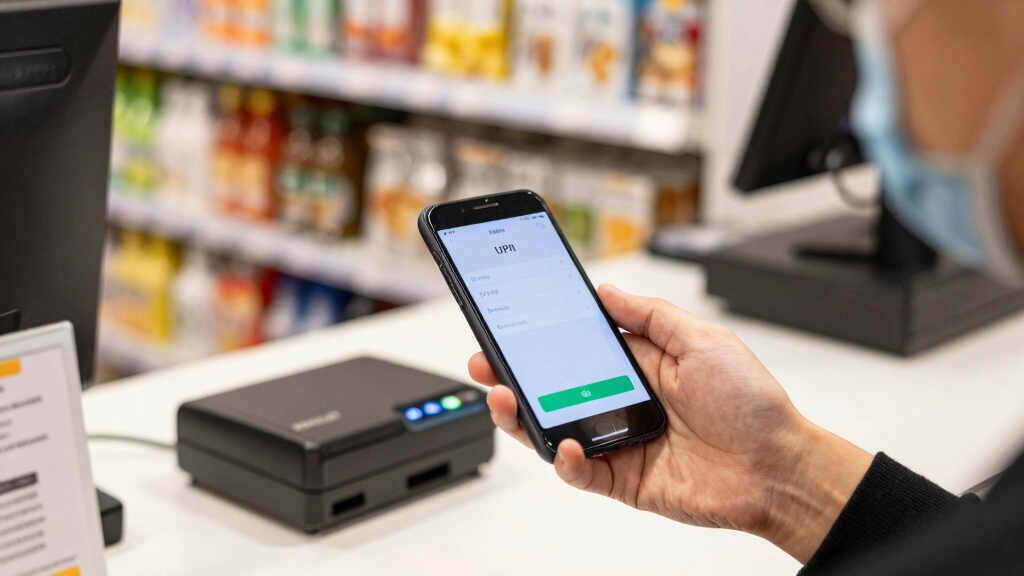
This article explains the confirmed process behind UPI payments, detailing each step from initiation to settlement. It highlights why understanding this process is important for users and stakeholders.
Unified Payments Interface (UPI) transactions involve a complex but transparent process that ensures secure and instant digital payments in India. This detailed breakdown confirms the key steps involved, from user initiation to settlement, emphasizing the system’s reliability and security.
According to industry sources and official UPI documentation, a typical UPI payment begins when a user initiates a transaction through a banking app or third-party payment service. The request is first authenticated via the user’s device and PIN or biometric verification. Once authenticated, the transaction details are sent to the payer’s bank (the issuing bank) through the National Payments Corporation of India (NPCI) infrastructure.
The issuing bank then verifies the account balance and confirms the transaction request. If sufficient funds are available, the bank forwards the payment instruction to the recipient’s bank (the receiving bank) via NPCI. Both banks execute the transfer almost instantaneously, updating their respective ledgers. The NPCI acts as the central switch, facilitating communication and settlement between banks, ensuring the transaction is completed securely and efficiently. Confirmation is sent back to the user’s device, completing the process.
Officials from NPCI have stated that the entire transaction process typically takes less than a few seconds, highlighting the system’s real-time processing capability. This process is supported by strict security protocols, including end-to-end encryption and multi-factor authentication.
Why Understanding UPI Transaction Mechanics Matters
Understanding the step-by-step process of UPI payments helps users appreciate the security, speed, and reliability of digital transactions. It also clarifies how banks and NPCI work together to prevent fraud and ensure seamless fund transfers. For businesses and regulators, this transparency supports trust and encourages wider adoption of digital payments, which are crucial for financial inclusion and economic growth.
As an affiliate, we earn on qualifying purchases.
Background and Evolution of UPI Payment Processing
Since its launch in 2016, UPI has become the dominant digital payment platform in India, processing billions of transactions annually. Its architecture leverages the NPCI’s real-time gross settlement system, which links multiple banks and payment service providers. Over time, UPI has integrated features like QR code payments, international remittances, and merchant transactions, all built on a robust infrastructure that emphasizes security and speed. Industry experts note that the transparency of the transaction process has contributed to widespread user trust.
“The UPI payment process is designed for speed and security, with every step verified in real-time to ensure funds are transferred safely.”
— Anil Kumar, NPCI spokesperson
biometric authentication device for mobile payments
As an affiliate, we earn on qualifying purchases.
As an affiliate, we earn on qualifying purchases.
Unconfirmed Aspects of UPI Transaction Handling
While the core steps are well-documented, details about how disputes are resolved or how fraud detection mechanisms integrate into real-time processing are less transparent. It is also not yet clear how future technological updates might alter the transaction flow or security protocols.
UPI PIN authentication security key
As an affiliate, we earn on qualifying purchases.
As an affiliate, we earn on qualifying purchases.
Future Developments in UPI Payment Infrastructure
Regulators and NPCI are expected to introduce enhancements to further improve security, such as biometric verification for transactions and AI-driven fraud detection. Additionally, ongoing efforts aim to expand UPI’s reach into international markets and integrate new payment features, which could modify some aspects of the current process. Monitoring these updates will be key for users and stakeholders.
digital payment verification hardware
As an affiliate, we earn on qualifying purchases.
As an affiliate, we earn on qualifying purchases.
Key Questions
How long does a UPI transaction typically take?
Most UPI transactions are completed within a few seconds, thanks to real-time processing facilitated by NPCI’s infrastructure.
Is my transaction secure during the process?
Yes, UPI transactions employ multiple security measures, including encryption, multi-factor authentication, and device verification, to protect user data and funds.
What happens if a transaction fails?
If a transaction fails, the user is notified immediately. The issue could be due to insufficient funds, network problems, or security restrictions, and the process for dispute resolution varies by bank.
Can the process change with future updates?
Yes, as technology evolves, the transaction process may incorporate new security features or protocols, but core principles of real-time settlement are expected to remain consistent.
How does NPCI ensure the security of all transactions?
NPCI employs strict security protocols, including encryption, continuous monitoring, and fraud detection systems, to safeguard the entire UPI ecosystem.
Source: hn
Halloween Picks
halloween
As an affiliate, we earn on qualifying purchases.