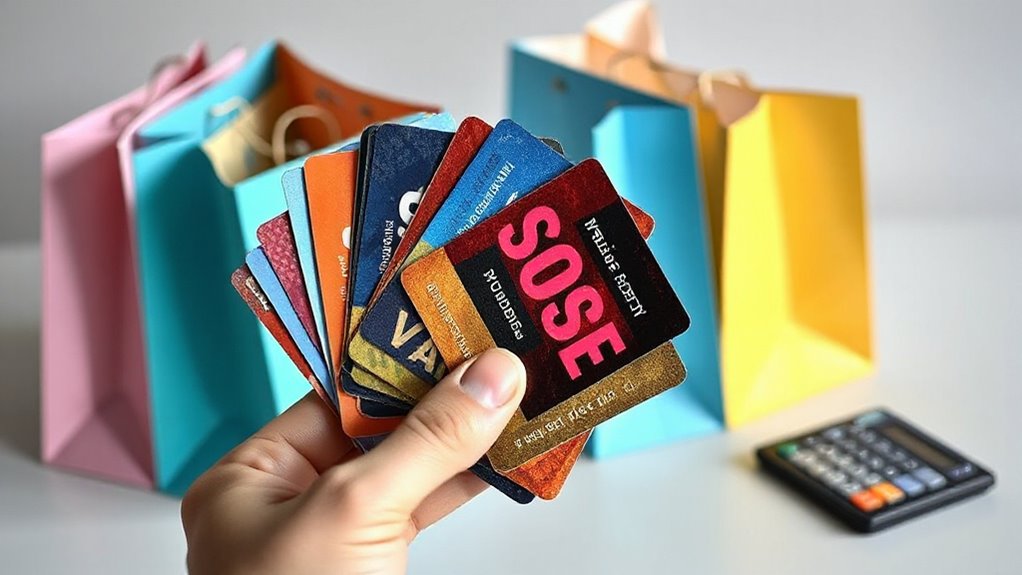

Did you know that the average APR for store credit cards can exceed 30%? While those enticing discounts and rewards might seem appealing, carrying a balance can quickly negate any savings. Before you swipe that card, it’s vital to understand the potential costs involved. Are those discounts really worth the high interest, or could you be better off with a different payment method? Let’s explore the ins and outs of store credit cards.

Get your next haul delivered free with Prime
- Fast, free delivery on millions of items
- Prime Video, Amazon Music and more included
- Member-only deals all year
Key Takeaways
- Store credit cards typically have high APRs (around 30.58%), which can quickly negate any discounts if balances are not paid off promptly.
- Discounts of 10-20% on initial purchases offer immediate savings but may not be worthwhile if high interest accrues on carried balances.
- Rewards programs are beneficial for frequent shoppers, but limited flexibility restricts value compared to general-purpose credit cards.
- Special financing options and seasonal sales enhance the value of store cards during large purchases, making them more appealing at those times.
- Alternatives like Buy Now, Pay Later (BNPL) provide more flexible, often interest-free payment options, making them a better choice for managing costs.
Understanding Store Credit Card Interest Rates

When you consider applying for a store credit card, it’s vital to understand the interest rates involved. The average annual percentage rate (APR) on these cards hovers around 30.58%, notably higher than typical credit cards, which range from 20.12% to 24.19%. Closed-loop cards, which can only be used at specific retailers, often carry even steeper rates, averaging 31.64%. Over 90% of retail cards exceed 30% APR, while less than 40% of general-purpose cards do. These high rates can quickly accumulate, particularly if you carry a balance. It’s essential to weigh these potential costs against any benefits before committing, ensuring you won’t inadvertently end up paying much more than you saved through discounts. Additionally, consider researching customer reviews and complaints to gauge the reputation of the store credit card issuer before making your decision.
Discounts and Rewards: What’s on Offer?

Understanding the high interest rates associated with store credit cards is only part of the equation; you’ll also want to think about the discounts and rewards they offer. Many store cards provide immediate savings, like 10-20% off your first purchase, plus points redeemable for future buys. You might also enjoy perks such as early sale access or birthday rewards, but these benefits are usually limited to the issuing retailer. Additionally, considering the nature of your spending habits can help you determine if the potential eco-friendly practices of using store cards align with your overall financial strategy.
| Discount Type | Details |
|---|---|
| First Purchase | 10-20% off your initial buy |
| Reward Points | Earn points redeemable for discounts |
| Exclusive Sales | Special pricing for cardholders only |
| Early Access | Get early access to sales events |
| Birthday Rewards | Special offers during your birthday |
Consider how these perks align with your shopping habits!
Who Uses Store Credit Cards?

Who really benefits from store credit cards? You might find that millennials and parents are the primary users, drawn in by enticing discounts and rewards. If you frequently shop at a specific retailer, these cards can offer immediate savings and exclusive deals that appeal to your shopping habits. Surprisingly, 57% of store cardholders consider their store card their main credit card, even with high interest rates. Many consumers prioritize discounts over APR concerns, with only 58% considering interest rates before applying. If you’re someone who can pay off balances in full each month, store cards might work in your favor. Still, it’s essential to evaluate your shopping patterns and financial habits before diving in. Additionally, users should be aware that high interest rates can quickly negate the benefits of any discounts received.
Comparing Costs: Store Cards vs. General Purpose Cards

How do store credit cards compare to general purpose cards regarding costs? Store cards typically incur higher costs due to markedly elevated APRs. While general purpose cards average around 20.12%-24.19%, store credit cards often exceed 30%. This can affect your finances if you carry a balance.
| Feature | Store Credit Cards |
|---|---|
| Average APR | 30.58% |
| Rewards Availability | Store-specific only |
| Discount Offers | Often immediate discounts |
| Flexibility | Limited to one retailer |
Considering these factors, you may find that although store cards offer attractive discounts, their high interest rates can offset potential savings if you’re not careful with your spending. Always weigh the costs before choosing.
Financial Risks of Store Credit Cards

While store credit cards can seem appealing due to their discounts and rewards, they come with significant financial risks that can quickly outweigh those benefits. Here are a few key concerns you should consider:
- High Interest Rates: APRs can exceed 30%, making carrying a balance costly.
- Limited Flexibility: These cards usually work only at specific retailers, restricting your spending choices.
- Debt Accumulation: Discounts can tempt you to spend more than planned, leading to increased debt.
- Late Fees and Penalties: Missing payments can spike your interest rates even higher.
- Credit Score Impact: High utilization rates from store cards can negatively affect your credit score if not managed properly. Additionally, consider how financial management can help mitigate these risks.
Understanding these risks can help you make informed decisions about whether a store credit card is worth it for you.
When Are Store Card Discounts Worth It?

Store card discounts can really pay off when you’re making a large purchase, especially if the card offers special financing options. If you frequently shop at a specific retailer, those rewards can add up and save you money over time. Just make sure you’re able to pay off your balance each month to avoid high interest charges that can negate those savings. Additionally, many store cards come with exclusive rewards programs that can further enhance your savings potential.
Large Purchases and Financing
When planning a large purchase, store credit cards can offer significant advantages if used wisely. Here are key points to consider:
- Immediate Discounts: Enjoy 10-20% off your first purchase.
- Special Financing Offers: Spread payments over time without interest for a limited period.
- Exclusive Promotions: Access deeper discounts during seasonal sales.
- Rewards Points: Earn points redeemable for future purchases at the same store.
- Access to Credit: Store cards may provide financing options when other credit sources aren’t available.
If you can pay off your balance each month, these benefits can outweigh the high interest. However, be cautious about overspending, as carrying a balance could quickly negate your savings. Additionally, understanding user consent management is important, as it allows you to control your preferences when engaging with financial offers online.
Frequent Retailer Shoppers
How often do you find yourself shopping at the same retailer? If you’re a frequent shopper, store credit cards might offer you valuable benefits. Many retailers provide immediate discounts, loyalty rewards, and exclusive promotions for cardholders. If you regularly purchase from a specific store, taking advantage of these discounts can save you money in the long run. However, it’s essential to weigh the benefits against the high-interest rates typical of these cards. If you can pay off your balance each month, the discounts can be worthwhile. But if you’re carrying a balance, those savings might quickly disappear due to interest charges. Ultimately, evaluate your shopping habits and financial situation before committing to a store card. Additionally, understanding how compassionate caregiving can help manage financial stress is crucial for caregivers balancing their own budgets while supporting older adults.
Timely Balance Payments
While considering a store credit card, it’s crucial to understand that timely balance payments can greatly enhance the value of the discounts offered. By paying your balance in full each month, you can avoid the high interest rates that often accompany these cards. Here’s when those discounts become worthwhile:
- Enjoy immediate savings on your first purchase.
- Maximize rewards on frequent purchases at the same retailer.
- Take advantage of special financing offers for big buys.
- Use exclusive discounts during seasonal sales.
- Avoid interest charges that diminish your savings.
- If you manage your payments wisely, you can enjoy exclusive discounts that enhance your shopping experience without incurring additional costs.
If you can commit to timely payments, you’ll reap the benefits of your discounts without falling into the trap of accumulating debt.
The Shift Towards Alternative Payment Options

As you explore your payment options, you might notice a growing trend toward alternatives like Buy Now, Pay Later plans and general purpose credit cards. These methods offer flexibility and often come with lower interest rates compared to store credit cards. Plus, the rise of digital wallets is making it easier than ever to manage your spending across various retailers without being tied to a single store card. Additionally, using these alternatives can enhance your data protection services and shield you from potential fraud associated with store-specific credit cards.
Buy Now, Pay Later
With the rising popularity of Buy Now, Pay Later (BNPL) options, many consumers are rethinking their reliance on traditional store credit cards. BNPL lets you split purchases into manageable payments, often without interest if paid on time. Here are some reasons why this shift is happening:
- Flexibility in payment options
- No high interest rates like store cards
- Easy-to-understand terms and no hidden fees
- Access to a wider range of retailers
- Potentially better budgeting control
As you consider your payment choices, BNPL can offer a budget-friendly alternative to store credit cards. It empowers you to make purchases without the burden of high APRs, helping you manage your finances more effectively. Additionally, as consumers prioritize sustainable cloud solutions, it’s essential to consider how payment methods align with broader financial and ethical values.
General Purpose Credit Cards
The rise of Buy Now, Pay Later (BNPL) options is prompting many consumers to explore general purpose credit cards as a more flexible payment method. Unlike store credit cards, general purpose cards offer broader usability, allowing you to shop at various retailers without being tied to a single brand. They typically feature lower interest rates, making them a more affordable choice for those who carry a balance. Plus, many general purpose cards provide rewards and benefits that can be redeemed for travel, cash back, or other perks, enhancing their appeal. As consumers prioritize flexibility and lower costs, general purpose credit cards are becoming a preferred alternative, offering a well-rounded approach to managing expenses.
Digital Wallet Adoption
While many shoppers still rely on traditional credit cards, a growing number are embracing digital wallets as a convenient and secure alternative for payments. You’ll find that digital wallets simplify transactions and often provide added security features. Plus, they integrate seamlessly with your favorite retailers and loyalty programs.
- Instant access to funds for quick payments
- Enhanced security with encryption and biometric authentication
- Easy tracking of spending and rewards
- Contactless payment options for swift checkouts
- Compatibility with various devices, including smartphones and smartwatches
As digital wallets gain popularity, they’re reshaping how you think about payments, making it easier to shop without the hassle of physical cards and high-interest store credit options.
Making Informed Decisions About Store Credit Cards

Before you decide to apply for a store credit card, it’s vital to weigh the benefits against the potential costs. While immediate discounts and rewards can seem enticing, remember that store cards often carry high interest rates, averaging over 30%. If you don’t pay off your balance in full each month, those savings can quickly disappear. Consider how frequently you shop at the retailer and whether the rewards align with your spending habits. Also, think about your overall financial situation—carrying debt could harm your credit score. Make sure to read the fine print, evaluating fees and terms, to guarantee you’re making a choice that truly benefits your financial health. Informed decisions can save you money in the long run.
Frequently Asked Questions
Can I Use Store Credit Cards Anywhere Outside the Issuing Retailer?
You can’t use store credit cards anywhere outside the issuing retailer. These cards are typically closed-loop, meaning they’re designed exclusively for purchases at a specific store or its affiliates. If you’re looking for flexibility in where you can spend, a general-purpose credit card might be a better choice. Store cards often provide enticing discounts, but they limit your options, so consider your shopping habits before applying for one.
How Do Store Credit Cards Affect My Credit Score?
Store credit cards can impact your credit score in several ways. When you apply, it may cause a hard inquiry, which can temporarily lower your score. High credit utilization from carrying balances can also hurt your score. However, if you manage the card responsibly—making on-time payments and keeping balances low—you can build a positive credit history. Just be cautious, as excessive reliance on store cards might negatively affect your overall credit health.
Are There Annual Fees Associated With Store Credit Cards?
Yes, some store credit cards do have annual fees, but not all of them do. It’s essential to read the terms before applying. While some cards offer great perks, those fees can eat into your savings. If you’re a frequent shopper at that store, weigh the benefits against the cost. Always consider whether you’ll use the card enough to justify any annual fee attached to it.
What Happens if I Miss a Payment on My Store Card?
If you miss a payment on your store card, you’ll likely incur late fees and possibly see your APR increase. This can quickly add to your debt, making it harder to pay off. Additionally, missing payments can negatively impact your credit score, affecting your ability to secure loans in the future. To avoid these consequences, set reminders or automate payments so you stay on top of your billing cycle.
Can I Transfer My Store Card Balance to Another Credit Card?
You can often transfer your store card balance to another credit card, especially if the new card offers a balance transfer option. Surprisingly, around 57% of store cardholders use their store card as their primary credit card. Before transferring, check the new card’s terms, including any fees or promotional APR rates. Just make sure you can pay off the balance before the promotional period ends to avoid high interest.
Conclusion
In the end, it’s all about balance. You might snag a fantastic discount, but if you carry a balance, those savings can vanish faster than you think. Just like a great sale that ends unexpectedly, interest can catch you off guard. Before you sign up for a store credit card, weigh the pros and cons. Making informed choices now could save you from financial surprises later—because sometimes, the best deal is simply avoiding high interest altogether.
Columbus Day / Indigenous Peoples' Day Picks
long weekend sales
As an affiliate, we earn on qualifying purchases.