
TL;DR

Get your next haul delivered free with Prime
- Fast, free delivery on millions of items
- Prime Video, Amazon Music and more included
- Member-only deals all year
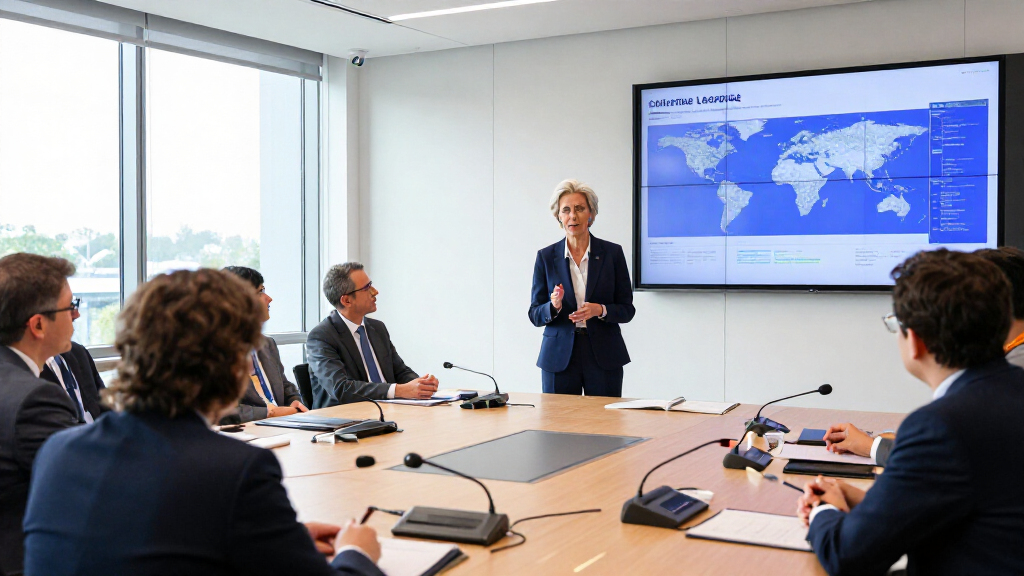
ECB President Christine Lagarde told the IMF’s International Monetary and Financial Committee on October 17 that the euro area had remained resilient, while conflict-driven energy price increases were lifting inflation and clouding the outlook. She said the ECB had raised rates by 25 basis points in September and would base future decisions on incoming data; the statement did not specify a next rate move.
European Central Bank President Christine Lagarde told the IMF’s International Monetary and Financial Committee on October 17 that the euro area economy had held up despite global uncertainty, while a surge in energy inflation was pushing prices higher and creating risks for growth. Her statement summarized the ECB’s projections and recent rate decisions but did not announce a new policy move.
Lagarde said headline inflation reached 3.8% in September, largely because of higher energy inflation, with food and services prices also contributing to a lesser extent. Core inflation rose slightly to 2.5%. She said underlying inflation measures were broadly stable and wages had not yet shown a material response to the energy shock.
The ECB’s September staff projections, cited in the statement, put euro area growth at 0.9% in 2026, 1.4% in 2027 and 1.5% in 2028. Lagarde said activity had grown across most euro area countries and sectors in the first half of 2026. The projections anticipate support from domestic demand, recovering real incomes, public spending on infrastructure and defence, and investment in artificial intelligence and digital technologies.
The Governing Council raised key ECB interest rates by 25 basis points in September, following a 25-basis-point increase in June. Lagarde said the ECB considers the inflation outlook, underlying inflation and the strength of monetary policy transmission when setting rates, as discussed in her interview with Les Échos. She described a measured response as appropriate, while saying the energy shock was too large to ignore.
Energy Prices Put Rates in Focus
The statement sets out the tension facing ECB policymakers: energy costs are raising near-term inflation, but tighter financing conditions could weigh on activity. Lagarde said higher energy prices were expected to keep inflation well above the ECB’s target into the first half of 2027, before it declines and returns to around target toward the end of that year.
For households and businesses, the path of energy costs matters both directly through bills and indirectly if higher input prices spread to other goods and wages. Lagarde said the ECB had not yet seen significant pass-through beyond what its projections already included. A more persistent shock could change that assessment and make inflation harder to bring down, while tighter financing conditions could restrain growth.
The remarks also signal that the ECB is not committing in advance to a particular sequence of rate decisions. Lagarde said future policy would depend on incoming economic and financial data assessed through the bank’s reaction function. The statement is a policy account, not a rate announcement.
As an affiliate, we earn on qualifying purchases.
The ECB’s September Outlook
Lagarde’s statement was delivered at the 54th meeting of the International Monetary and Financial Committee during the IMF Annual Meetings. It addressed the global economy as well as the euro area, citing Middle East conflict, trade tensions and protectionist measures as sources of uncertainty. She said investment in technology, including AI, had helped support global activity and trade, particularly in economies linked to technology supply chains.
The ECB’s September projections were made before the statement’s discussion of the latest inflation figures. Lagarde said growth risks were tilted to the downside and inflation risks to the upside. She also argued that fiscal support for the energy shock should be temporary and targeted, and called for sound public finances, workforce skills and improved conditions for innovative firms.
Separately, the statement noted that the ECB Governing Council decided in July on operating arrangements and onboarding for the enhanced Eurosystem repo facility, EUREP. Lagarde said more than 30 central banks had expressed interest in the past six months, and described the facility as supporting monetary policy transmission and the euro’s international role.
“The energy shock is too large to “look through” but a measured response remains appropriate to keep inflation in check.”
— Christine Lagarde, ECB president, in her IMFC statement
As an affiliate, we earn on qualifying purchases.
How Long the Energy Shock Lasts
The statement does not establish how intense or long-lasting the Middle East conflict will be, or how its effects will spread through the economy. Those uncertainties are central to the outlook for both growth and inflation. Lagarde also said extreme weather could raise food prices, while a lasting easing of geopolitical tensions or weaker energy price pass-through could reduce inflation pressure.
It remains unclear whether higher energy prices will begin to affect wages and prices more broadly. Lagarde said there was no evidence at that stage of significant additional pass-through, but warned that a stronger or more persistent shock could produce indirect and second-round effects. The statement does not give a numerical estimate for the possible scale of those effects.
Nor does it specify how the ECB will respond at its next meeting. The source describes the September and June rate increases and the criteria for future decisions, but gives no timetable or forecast for another move.
As an affiliate, we earn on qualifying purchases.
Future Decisions Depend on Data
The ECB says it will make a comprehensive assessment of incoming data under its reaction function when setting future monetary policy. Inflation readings, wage developments, energy prices, economic activity and financing conditions will inform that assessment. Lagarde’s statement offers no pre-commitment to raise, hold or lower rates at a particular meeting.
The near-term outlook in the September projections is for inflation to remain above target into the first half of 2027, then ease as energy inflation falls, with a return to around target toward the end of 2027. Those projections depend on how the energy shock and other risks develop. The statement does not provide an updated projection or a new release date.
As an affiliate, we earn on qualifying purchases.
Key Questions
What did Christine Lagarde say in the IMFC statement?
She said the euro area economy had proved resilient, but higher energy prices were lifting inflation and increasing uncertainty. She also outlined the ECB’s growth projections and recent interest-rate decisions.
What were euro area inflation and growth figures in the statement?
Lagarde reported September headline inflation of 3.8% and core inflation of 2.5%. The ECB’s September projections put growth at 0.9% in 2026, 1.4% in 2027 and 1.5% in 2028.
Did Lagarde announce another ECB rate increase?
No. The statement reports 25-basis-point increases in June and September and explains how future decisions will be made. It does not announce another increase or give a date for one.
When does the ECB expect inflation to return to around target?
The September projections cited by Lagarde expect headline inflation to decline after the first quarter of 2027 and return to around target toward the end of 2027. The outlook depends partly on energy prices and geopolitical developments.
Source: primary
Halloween Picks
halloween
As an affiliate, we earn on qualifying purchases.