
When considering your wardrobe choices, you might find yourself torn between luxury clothing and fast fashion. Each offers unique benefits and drawbacks that can impact your style, budget, and values. Are those designer pieces really worth the investment, or is the allure of trendy items more appealing? Understanding the nuances between these two approaches can help you make more informed decisions. But what factors should you weigh most heavily?
Key Takeaways
- Luxury clothing often boasts superior craftsmanship and exclusive materials, justifying higher prices through longevity and potential value appreciation.
- Fast fashion provides affordable, trendy options but sacrifices quality, leading to shorter product lifespans and increased waste.
- Many consumers blend both luxury staples and fast fashion to balance quality, affordability, and style preferences.
- The secondhand luxury market promotes sustainability and offers high-quality items at lower prices, appealing to budget-conscious shoppers.
- Growing environmental concerns encourage consumers to prioritize sustainable choices, influencing the perceived value of luxury versus fast fashion.
Understanding Consumer Preferences: Luxury vs. Fast Fashion

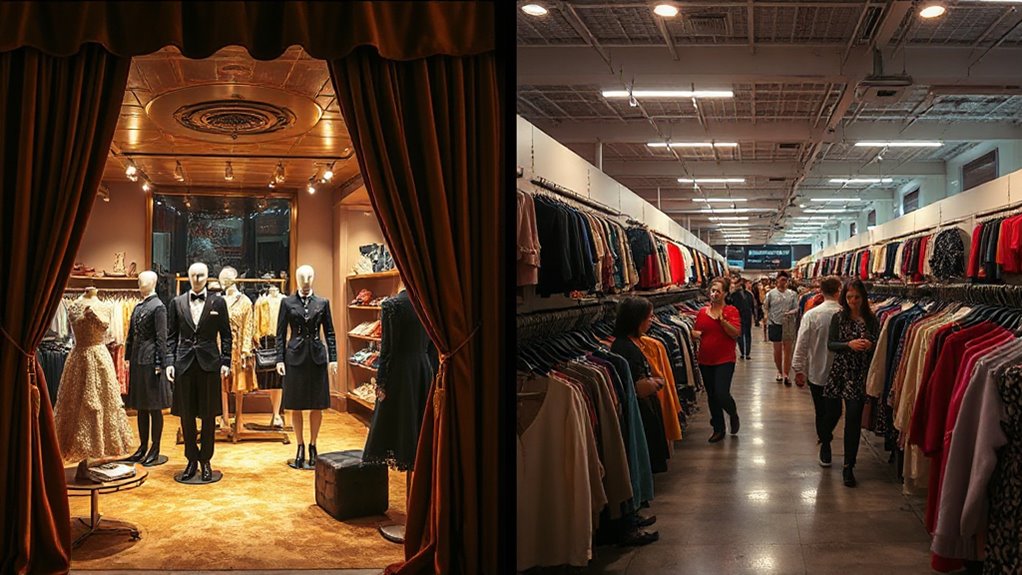
Why do consumers gravitate toward luxury or fast fashion? You’re likely drawn to the allure of luxury for its quality, exclusivity, and craftsmanship. Luxury pieces promise longevity and timeless style, making them seem like worthwhile investments. On the other hand, fast fashion captivates you with its affordability and trendiness. It allows you to refresh your wardrobe frequently without breaking the bank. You might appreciate the ability to experiment with styles, but you may also question the quality and environmental impact of fast fashion. Ultimately, your preferences may reflect a blend of both worlds; you might invest in luxury staples while indulging in fast fashion for trendy pieces. This duality shapes how you approach your wardrobe choices. Additionally, understanding color accuracy is crucial in making informed decisions about the value of clothing items, as it influences how colors appear in different lighting conditions.
The Impact of Economic Trends on Spending Habits
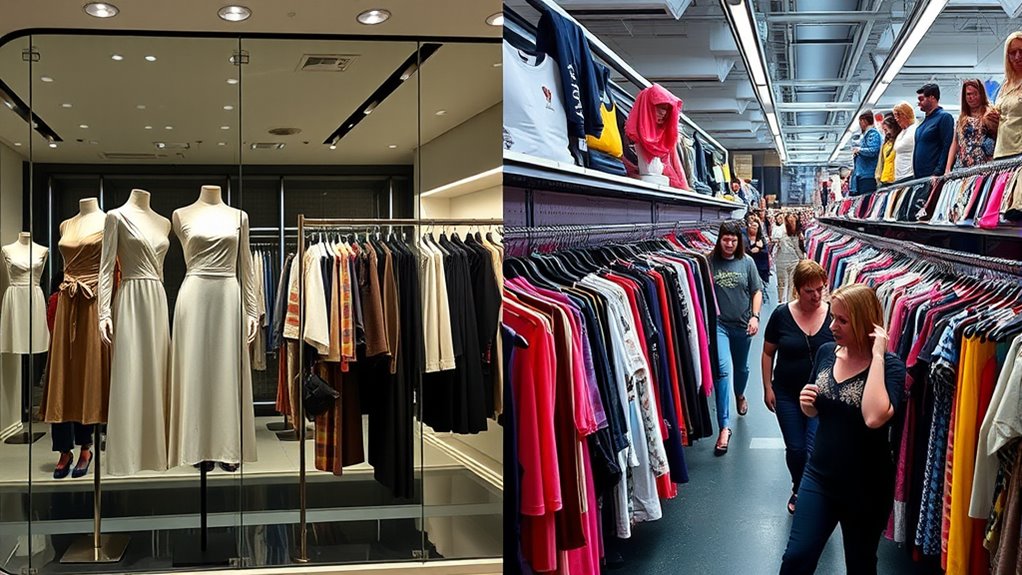
As economic conditions shift, you might find your spending habits adapting to the pressures of inflation and uncertainty. With luxury spending down 7% and fast fashion up 5%, your choices reflect a desire for affordability. Younger consumers, particularly those aged 18-24, are less affected, while those 25-34 are cutting back more notably. Here’s a snapshot of how trends are evolving:
| Spending Category | 2024 Change | 2025 Projection |
|---|---|---|
| Luxury Clothing | -7% | Slow Growth |
| Fast Fashion | +5% | Continued Rise |
| Secondhand Luxury | +20% | Rapid Expansion |
These trends highlight a shift towards budget-friendly options while still appreciating luxury in a more sustainable way. As consumers seek to balance style and sustainability, many are turning towards eco-friendly options that reflect their values and reduce environmental impact.
Quality and Value: Are Luxury Prices Justified?
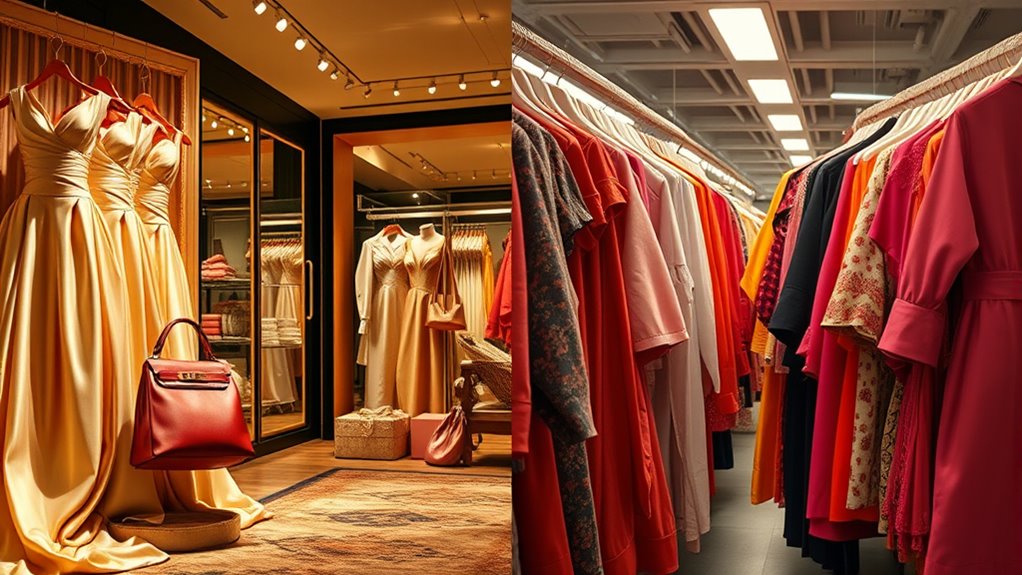
While luxury items often come with a hefty price tag, you might wonder if their costs truly reflect the quality and value they promise. Luxury brands often emphasize superior craftsmanship, exclusive materials, and timeless designs, which can justify higher prices. When you invest in a luxury piece, you’re not just buying a garment; you’re acquiring a status symbol that can retain or even appreciate in value over time. However, it’s essential to contemplate whether these qualities genuinely resonate with you. Fast fashion, while affordable, often sacrifices quality for trends. Ultimately, the decision lies in your personal values—do you prioritize longevity and craftsmanship, or are you more inclined to chase temporary styles at a lower cost? Investing in luxury goods can also be seen as a commitment to premium craftsmanship, which highlights the meticulous effort that goes into creating high-end products.
Sustainability and Ethical Considerations in Fashion
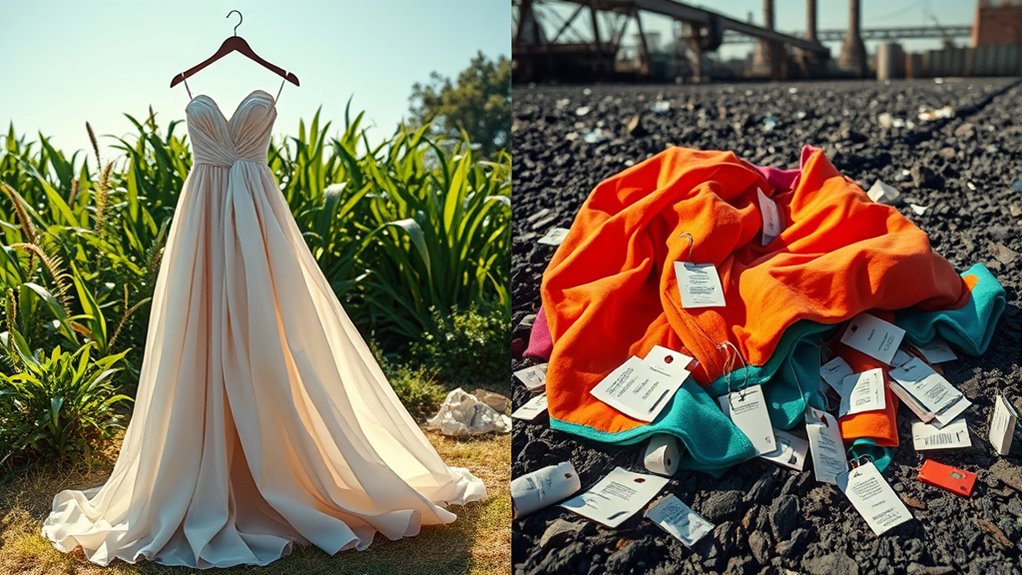
Understanding sustainability and ethical considerations in fashion is crucial in today’s consumer landscape, especially as awareness of environmental impacts grows. You might find yourself questioning the true cost of fast fashion compared to luxury pieces. Here are a few key points to contemplate:
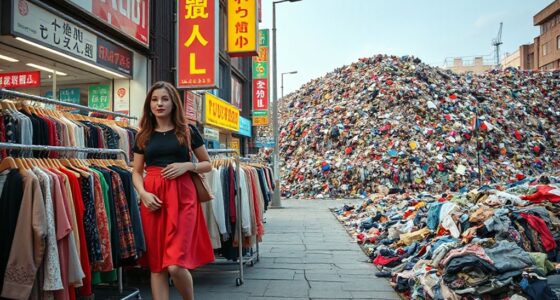
- Fast fashion leads to increased waste and shorter product lifecycles, raising significant sustainability concerns.
- Luxury brands often produce higher-quality, longer-lasting goods, which can reduce turnover and waste.
- The booming secondhand luxury market reflects a shift toward valuing circular fashion and sustainable practices.
- Additionally, the rise of energy-efficient cloud servers highlights the importance of sustainable technology solutions in the fashion industry.
As you navigate your wardrobe choices, keeping these factors in mind can help you make informed decisions that align with your values, fostering a more sustainable future in fashion.
The Future of Fashion: E-commerce and Market Dynamics
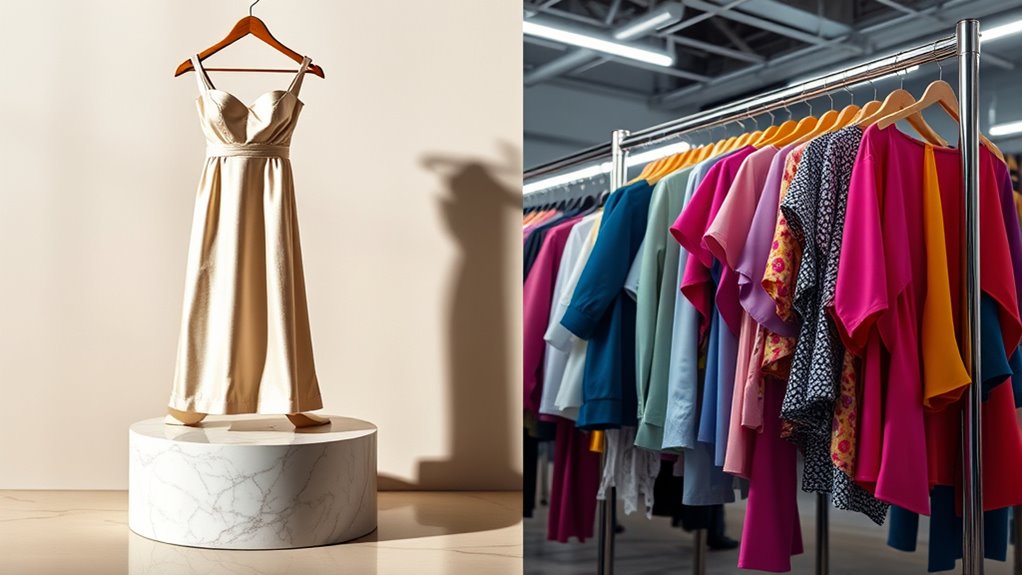
The future of fashion is increasingly shaped by e-commerce and evolving market dynamics, which are revolutionizing how consumers shop and interact with brands. As you navigate this landscape, you’ll notice younger shoppers gravitating towards fast fashion for affordability and quick trend updates. Meanwhile, luxury brands are slowly adapting to digital platforms, trying to capture that same audience. With the secondhand luxury market booming, savvy consumers are blending timeless pieces with budget-friendly finds. Sustainability concerns are also driving change, pushing brands to rethink their production methods. As economic pressures mount, you’ll see a shift toward quality and longevity, making it essential for you to stay informed about the best choices for your wardrobe.
Frequently Asked Questions
How Do Luxury Brands Maintain Exclusivity in a Saturated Market?
Luxury brands maintain exclusivity in a saturated market by limiting product availability, creating limited editions, and enhancing brand storytelling. You’ll notice they invest in unique craftsmanship and design, ensuring their products stand out. By carefully selecting retail locations and focusing on personalized customer experiences, they cultivate a sense of privilege around their goods. Additionally, strategic pricing and marketing reinforce the perception of luxury, making you feel special when you own these exclusive items.
What Are the Hidden Costs of Fast Fashion Beyond the Purchase Price?
The hidden costs of fast fashion go beyond the purchase price. You’re paying for poor quality, leading to frequent replacements and waste. Additionally, the environmental impact is significant, with increased pollution and resource depletion. Social implications arise, too, as workers often face low wages and poor conditions. Ultimately, you might find that those low-priced items come with a higher price tag on sustainability, ethics, and the long-term value of your wardrobe.
How Does Resale Value Differ Between Luxury and Fast Fashion Items?
Ever wondered why some clothes hold their value while others don’t? Luxury items often retain or even appreciate in resale value, especially limited editions, thanks to their quality and exclusivity. In contrast, fast fashion pieces typically depreciate quickly, reflecting their lower quality and trend-driven nature. When you buy luxury, you’re investing in something that might offer a return later, while fast fashion often leads to a loss as styles fade.
What Role Do Influencers Play in Luxury vs. Fast Fashion Purchases?
Influencers considerably shape your purchasing decisions in both luxury and fast fashion. They create aspirational content that highlights luxury brands, making you feel part of an exclusive lifestyle. In contrast, their promotion of fast fashion often emphasizes affordability and trendiness, enticing you to buy more frequently. This dual influence can lead you to invest in timeless luxury pieces while also seeking budget-friendly options, aligning your wardrobe with current trends and personal style.
How Can Consumers Identify Truly Sustainable Fashion Brands?
Exploring the fashion landscape is like searching for treasure in a vast ocean; you’ve gotta know where to look. To identify truly sustainable fashion brands, check for transparency in sourcing, ethical labor practices, and eco-friendly materials. Look for certifications like GOTS or Fair Trade. Research the brand’s commitment to minimizing waste and their production processes. Don’t hesitate to dig deeper; the real gems often lie beneath the surface!
Conclusion
In the end, choosing between luxury and fast fashion’s like picking between a fine wine and a fast drink; both have their place, but the experience differs vastly. If you value craftsmanship, durability, and sustainability, investing in luxury might be your best bet. However, if you thrive on experimentation and trends, fast fashion offers a vibrant path. Ultimately, it’s about aligning your choices with your values and lifestyle, crafting a wardrobe that truly reflects who you are.