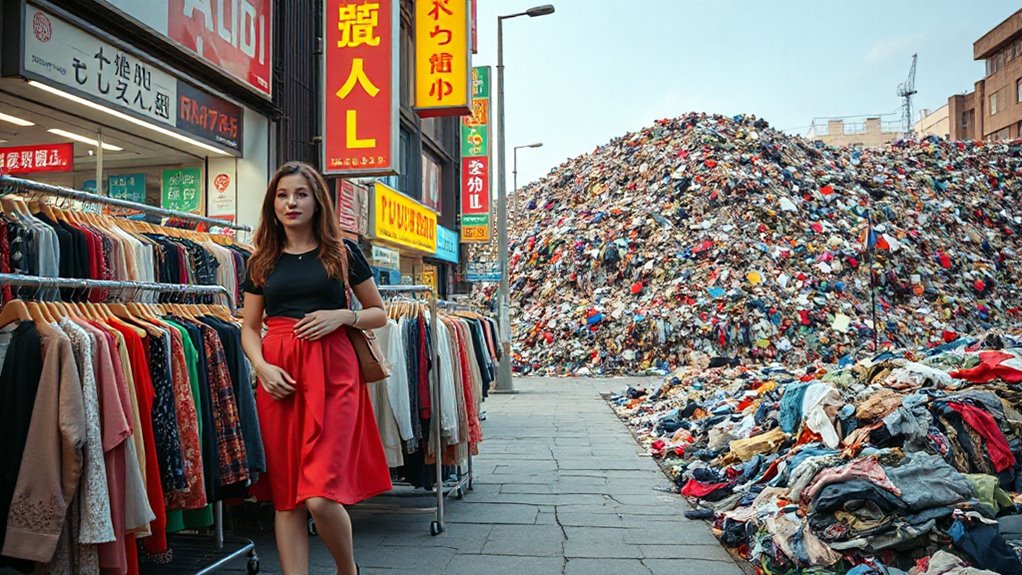

Fast fashion may seem affordable, but it hides serious costs. You support unethical labor practices, often in unsafe conditions with unfair wages, when buying cheap clothes. Additionally, fast fashion harms the environment through excessive waste, pollution, and resource consumption like water and energy. These hidden costs affect workers, communities, and ecosystems, making the true price much higher. To learn more about how your choices impact the world, continue exploring these important issues.
Key Takeaways
- Cheap clothes often involve unethical labor practices, supporting sweatshops and unsafe working conditions.
- Low prices conceal significant environmental costs like pollution and resource depletion.
- Fast fashion contributes to textile waste and microplastic pollution harming ecosystems.
- Hidden costs include human suffering and environmental damage not reflected in retail prices.
- Supporting fast fashion encourages overconsumption, leading to greater waste and ecological footprint.
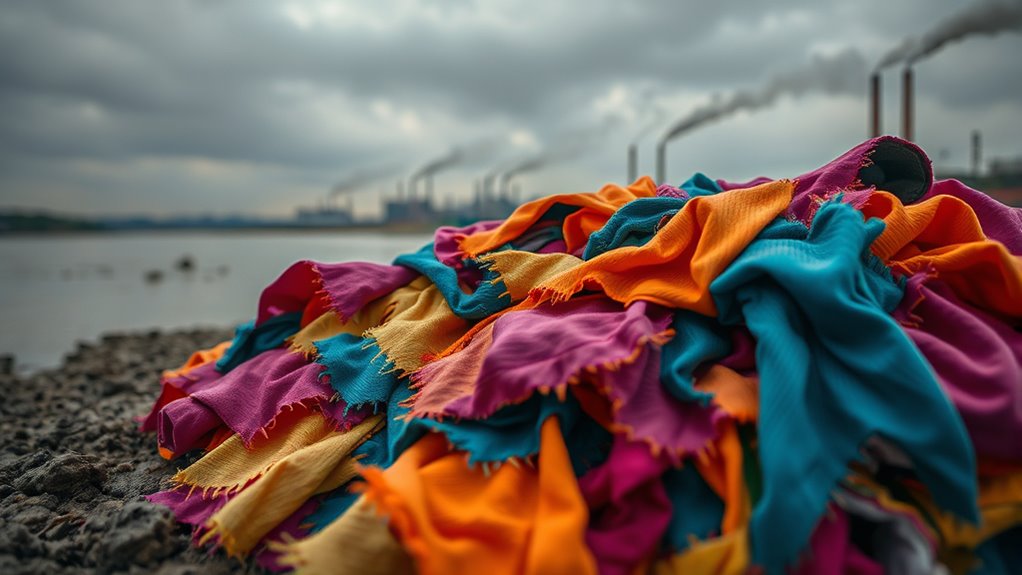
Have you ever wondered what the true price of cheap, trendy clothing really is? Behind the flashy ads and low prices lies a complex web of issues that often go unnoticed. When you buy fast fashion, you’re not just purchasing a new outfit; you’re also supporting a supply chain that frequently sacrifices ethics and environmental health. Many fast fashion brands prioritize speed and cost-cutting over the well-being of workers and the planet. This focus on rapid production often means compromising supply chain ethics, leading to sweatshop labor, unsafe working conditions, and unfair wages in developing countries. While the label might seem affordable, the human cost behind it is far from justifiable.
The environmental impact of fast fashion is equally alarming. These brands churn out new styles weekly, encouraging consumers to buy more and dispose of clothes quickly. This cycle generates enormous amounts of textile waste, much of which ends up in landfills. The production process itself consumes vast quantities of water, energy, and chemicals, polluting local ecosystems and contributing to climate change. Synthetic fibers like polyester, which are common in fast fashion garments, shed microplastics with every wash, contaminating oceans and harming marine life. Additionally, the use of cheap, non-renewable resources further exacerbates environmental degradation. All these environmental costs are often hidden beneath the surface of a low price tag, making it easy for consumers to overlook the damage being done.
By choosing fast fashion, you’re inadvertently supporting a supply chain that often neglects ethical standards and environmental sustainability. The relentless push for cheaper, faster production means corners are cut—whether it’s exploiting cheap labor or ignoring environmental regulations. This cycle perpetuates a system where profits are prioritized over people and the planet. It’s tempting to focus solely on the immediate savings, but in doing so, you ignore the broader consequences. The pollution, waste, and human suffering caused by fast fashion are costs that don’t show up at checkout but are very real.
Understanding these hidden costs is vital if you want to make more conscious choices. You can start by researching brands that prioritize supply chain ethics and sustainable practices. Opt for higher-quality pieces that last longer instead of fleeting trends. Remember, cheap clothes come with a price—one paid not just in dollars but in environmental degradation and human suffering. Recognizing this allows you to make smarter, more responsible decisions, reducing your footprint and supporting a more ethical fashion industry. The next time you’re tempted by a bargain, consider the unseen costs behind that seemingly inexpensive item. Being aware of the supply chain ethics involved can help you support brands that prioritize transparency and fairness.
Frequently Asked Questions
How Does Fast Fashion Impact Local Economies Globally?
Fast fashion impacts local economies globally by often ignoring supply chain ethics, which can lead to exploitation and poor working conditions. Your choices can undermine local artisan impact, as fast fashion tends to favor mass-produced goods over unique, handmade items. By supporting ethical brands and local artisans, you help promote fair wages, sustainable practices, and stronger communities, ensuring that economic benefits reach those who truly deserve it.
What Are the Long-Term Environmental Effects of Fast Fashion?
You might think fast fashion’s quick trends are harmless, but they cause significant long-term environmental effects. Textile waste piles up as discarded clothes fill landfills, and water pollution worsens due to dyeing processes. These issues harm ecosystems and threaten clean water sources. By supporting sustainable brands and reducing consumption, you can help lessen these impacts and protect the environment for future generations.
How Do Fast Fashion Brands Influence Consumer Behavior?
Fast fashion brands influence your behavior by encouraging consumer impulsiveness through constantly changing trends and low prices. They create a sense of urgency, making you buy quickly without much thought. At the same time, they foster brand loyalty by offering frequent new collections and affordable options, which keeps you coming back. This cycle keeps you hooked, often leading to overconsumption and less mindful purchasing habits.
What Policies Are in Place to Regulate Fast Fashion Practices?
You’re protected by policies like the Fashion Industry Charter for Climate Action and regulations against labor violations and intellectual property theft. These policies aim to guarantee fair wages, safe working conditions, and respect for designers’ rights. Governments and organizations are increasingly enforcing these rules, but gaps remain. Staying aware of your brands’ practices and supporting ethical companies helps push for stronger regulations and accountability in fast fashion.
How Can Consumers Make More Sustainable Clothing Choices?
You can make more sustainable clothing choices by prioritizing ethical shopping and choosing garments made from sustainable fabrics. Look for brands that transparently share their supply chain practices and commit to eco-friendly materials. Avoid fast fashion’s fleeting trends and instead invest in timeless pieces. By supporting ethical brands and researching their practices, you actively reduce your environmental impact and encourage a more responsible fashion industry.
Conclusion
So, next time you snag that $10 shirt, remember it’s not just a bargain—it’s a bargain with a hidden price tag. Fast fashion might save your wallet today, but it’ll cost the planet, workers, and your conscience tomorrow. Who knew cheap clothes came with such a hefty bill? Maybe it’s time to rethink your wardrobe choices. After all, the real cost of fast fashion isn’t in the label—it’s in the cost we all pay later.