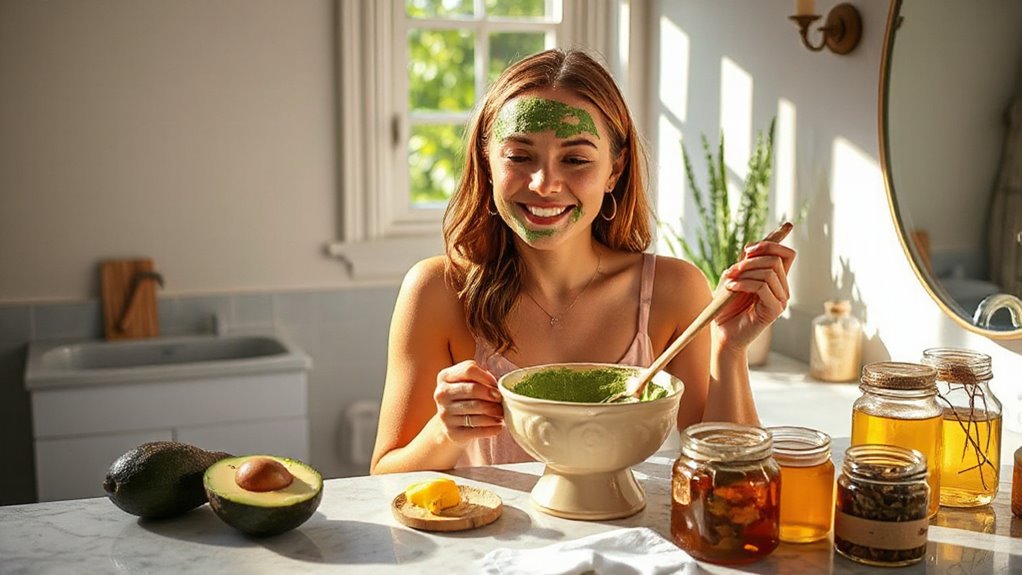

You can achieve salon-quality results at home by using natural ingredients to create effective DIY beauty treatments. Ingredients like honey, aloe vera, coconut oil, and oatmeal work together to hydrate, soothe, and exfoliate your skin. Customizing treatments based on your skin type boosts their effectiveness. These routines are cost-effective, chemical-free, and easy to make with simple kitchen items. Keep going, and you’ll discover how to transform your skincare routine into a personalized, professional-like spa experience at home.
Key Takeaways
- Use natural ingredients like honey, aloe vera, and oatmeal for effective, salon-quality skincare at home.
- Customize treatments based on your skin type to maximize results and minimize irritation.
- Regularly applying DIY masks boosts skin health, brightness, and hydration without expensive products.
- Prepare simple, nutrient-rich remedies with kitchen staples to achieve professional-looking skin.
- Consistency and understanding ingredient benefits help replicate salon results affordably at home.
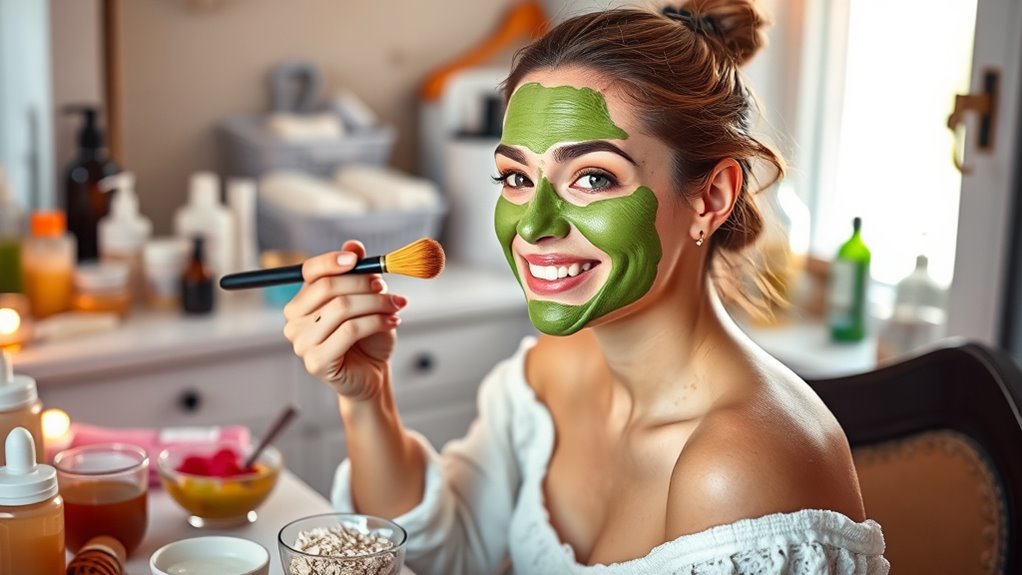
Have you ever wondered if you can achieve professional-looking beauty treatments at home? The good news is, you absolutely can, especially when you tap into the power of natural ingredients and customize your skincare routines. You don’t need expensive salon visits to enjoy glowing skin, a smooth complexion, or a relaxing spa-like experience. With a few simple ingredients from your kitchen, you can create effective treatments that rival those from high-end salons.
Natural ingredients are the cornerstone of successful DIY beauty treatments. Items like honey, aloe vera, coconut oil, and oatmeal aren’t just pantry staples—they’re packed with nutrients that nourish your skin deeply. Honey, for example, is a natural humectant that locks in moisture, making it perfect for hydrating dry skin. Aloe vera soothes irritation, reduces redness, and promotes healing, making it ideal for calming sunburns or inflamed skin. Coconut oil provides intense moisture and antimicrobial benefits, which help keep your skin soft and clear. Oatmeal gently exfoliates and calms sensitive skin, making it a versatile ingredient for various skincare routines.
Natural ingredients like honey, aloe vera, coconut oil, and oatmeal nourish, soothe, and exfoliate your skin effectively at home.
Creating your DIY treatments involves understanding your skin type and concerns. For dry skin, a hydrating mask using honey and yogurt can restore moisture and improve elasticity. If you’re battling oily or acne-prone skin, a mask with mashed avocado and a few drops of tea tree oil can help absorb excess oil while fighting bacteria. For sensitive skin, mixing oatmeal with aloe vera creates a soothing scrub that gently exfoliates without causing irritation. These treatments are easy to prepare, cost-effective, and free from harmful chemicals often found in store-bought products.
Using natural ingredients also supports sustainable practices by reducing reliance on synthetic chemicals and packaging waste. Incorporating natural ingredients into your skincare routines doesn’t mean sacrificing effectiveness. It’s all about choosing the right ingredients for your skin type and applying them consistently. For example, a weekly facial mask with turmeric and honey can brighten your complexion and reduce inflammation. Regularly using a coconut oil-based moisturizer can keep your skin supple and protected from environmental stressors. The key is to be mindful of your skin’s reactions and tweak your routines as needed, ensuring you get the best results without adverse effects.
Ultimately, achieving professional-looking beauty treatments at home is entirely within your reach. With a basic understanding of natural ingredients and how they work, you can craft personalized skincare routines that deliver real results. Not only do you save money, but you also gain the satisfaction of caring for your skin in a natural, mindful way. Consistency and a little creativity are your best tools as you turn your home into a mini spa, enjoying the benefits of radiant, healthy skin every day.
Frequently Asked Questions
Are DIY Beauty Treatments Safe for Sensitive Skin?
DIY beauty treatments can be safe for sensitive skin if you use natural ingredients and perform allergy testing first. Always patch test new remedies on a small skin area to check for reactions. Avoid harsh chemicals and fragrances, and stick to gentle, natural ingredients like honey or aloe vera. If you notice irritation, stop immediately and consult a dermatologist. Prioritizing safety helps you enjoy effective, affordable home treatments without risking sensitive skin.
How Often Should I Perform These Treatments at Home?
Think of your skin as a garden that needs just the right watering. For most treatments, follow the frequency guidelines on the product or recipe, typically every one to two weeks. Treatment scheduling varies based on your skin type and the treatment’s strength. Pay attention to how your skin reacts, and don’t overdo it—less is often more when it comes to DIY beauty.
Can I Customize Recipes for Specific Skin Types?
Yes, you can definitely customize recipes for your specific skin type. With customized skincare, you tailor ingredients to suit your needs, which enhances effectiveness. You can also try ingredient substitution to replace harsh or unsuitable elements. For example, if you have sensitive skin, swap out strong acids for gentle aloe or honey. Always research your skin type and test new ingredients in small amounts to avoid irritation.
What Are Common Mistakes to Avoid During DIY Treatments?
Did you know that 60% of DIY skin mishaps happen due to avoidable mistakes? To prevent issues, avoid ingredient substitution without research, as it can cause irritation. Always sterilize tools to prevent infections. Don’t skip patch tests; even natural ingredients can cause reactions. Follow instructions carefully, and don’t overuse treatments—more isn’t better. Staying mindful of these mistakes helps you achieve safe, salon-quality results at home.
Do DIY Treatments Deliver Long-Lasting Results?
DIY treatments can deliver satisfactory results, but their longevity often depends on proper DIY safety practices and correct application. While some treatments may last weeks, others might fade faster without professional techniques. To maximize treatment longevity, follow instructions carefully, use quality ingredients, and avoid shortcuts. Keep in mind that results may not be as long-lasting as salon procedures, but with proper care, you can enjoy benefits at home without sacrificing too much durability.
Conclusion
Now that you’ve learned to craft salon-worthy treatments at home, you hold the key to your own beauty sanctuary. Each DIY step is a brushstroke on your canvas of confidence, transforming simple ingredients into a masterpiece. Embrace this journey as a symbol of empowerment—your inner glow shining brighter with every self-care moment. Remember, you don’t need a salon to reveal your true radiance; your home is your sanctuary, where beauty blossoms from within.