
If you’re choosing between OLED, QLED, and Mini LED, consider how each suits your viewing needs. OLED offers deep blacks and vivid colors, perfect for dark scenes but can burn-in over time. QLED provides brighter images and is great for well-lit rooms, while being more durable with static images. Mini LED balances sharp contrast and brightness, with better energy efficiency and longevity. To understand which tech fits your lifestyle, explore the details that follow.

Get your next haul delivered free with Prime
- Fast, free delivery on millions of items
- Prime Video, Amazon Music and more included
- Member-only deals all year
Key Takeaways
- OLED offers superior contrast and color accuracy, especially in dark scenes, but consumes more power and risks burn-in.
- QLED provides brighter images and broader, more saturated colors with better energy efficiency in bright environments.
- Mini LED balances good contrast and color reproduction, with improved backlight control and durability against burn-in.
- OLED excels in contrast and deep blacks, while QLED and Mini LED are more resistant to static images and energy-efficient.
- Choice depends on viewing environment and content, with Mini LED as a middle ground between OLED and QLED benefits.
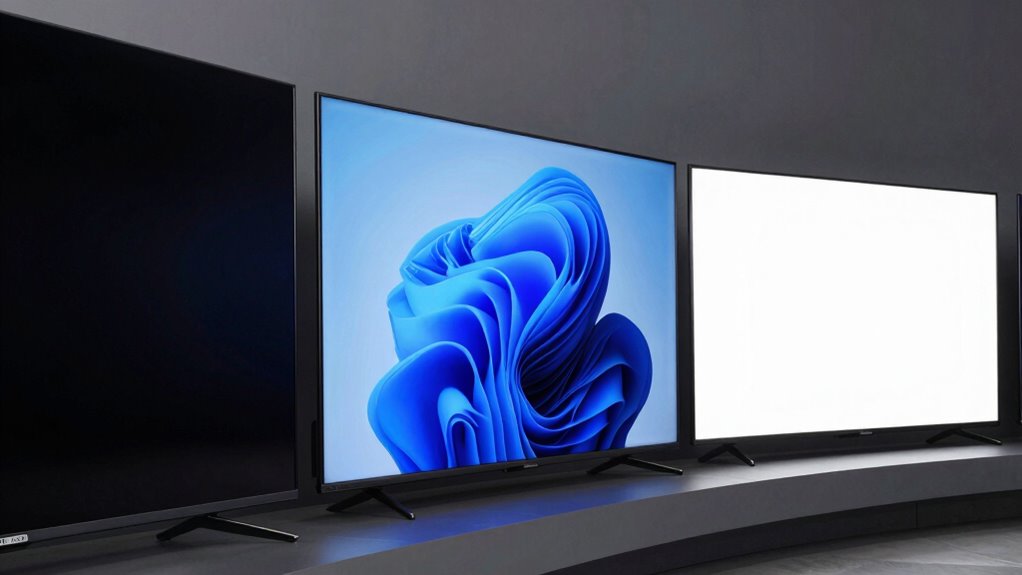
When choosing a high-quality TV, understanding the differences between OLED, QLED, and Mini LED technology is essential, as each offers unique advantages and drawbacks. These differences mainly revolve around color reproduction and energy efficiency, which directly impact your viewing experience and long-term usage. OLED screens excel in delivering exceptional color accuracy and contrast because each pixel emits its own light, allowing for deep blacks and vibrant hues. This means you see more natural and lifelike images, especially in dark scenes, making OLED ideal if you prioritize picture quality. However, OLEDs tend to consume more energy when displaying bright images since each pixel is actively lit, which can lead to higher power bills over time and potential burn-in issues if static images are displayed for prolonged periods.
OLED screens offer exceptional contrast and color accuracy, delivering natural, lifelike images, especially in dark scenes.
QLED TVs, which use quantum dot technology, shine in their brightness capabilities and color vibrancy. They produce a broader color spectrum compared to older LCD panels, resulting in more vivid and saturated images. While they don’t quite match OLED in perfect black levels, QLEDs still offer excellent contrast thanks to advanced local dimming features. When considering energy efficiency, QLEDs generally consume less power than OLEDs during bright scenes because their backlight is separate from the quantum dot layer. This separation allows for better control over brightness and reduces energy waste, especially when watching content with a lot of bright scenes. Additionally, QLEDs are less prone to burn-in, making them a more durable choice for static images or frequent use over time.
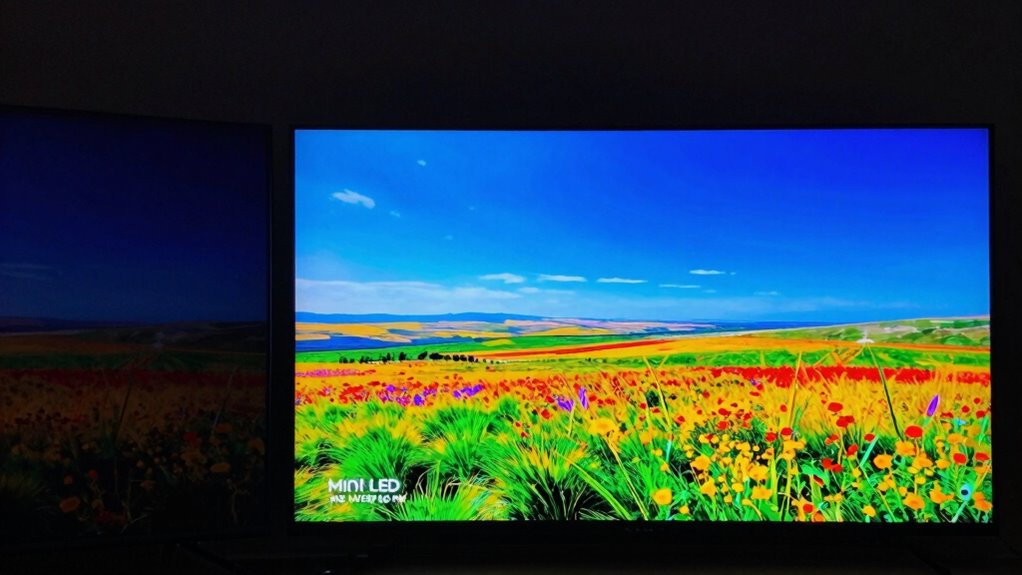
Mini LED technology represents a step forward in LCD-based displays, incorporating thousands of tiny LEDs for backlighting. This results in improved local dimming and contrast compared to traditional LED TVs, bringing picture quality closer to OLED levels. Mini LED TVs maintain strong color reproduction and high brightness, making them suitable for viewing in well-lit rooms. Regarding energy efficiency, Mini LED displays are generally more efficient than OLEDs because they use a separate backlight that can be precisely controlled, reducing power consumption during darker scenes. They also tend to be more resistant to burn-in, which is a significant advantage if you often watch static images or gaming content. As Mini LED technology continues to evolve, it offers a middle ground that combines many benefits of OLED and QLED displays, making it a versatile choice for various viewing preferences.
As an affiliate, we earn on qualifying purchases.
Frequently Asked Questions
Which Technology Has the Longest Lifespan?
You’ll find that Mini LED displays tend to have the longest lifespan among these technologies. Their manufacturing durability is higher because they use traditional backlighting methods, reducing the risk of burn-in that OLEDs might experience. While OLED offers superb color accuracy, its organic materials can degrade over time, shortening its lifespan. QLEDs sit somewhere in between, but generally, Mini LED’s resilient construction ensures they last longer with minimal decline in picture quality.
Are There Any Health Concerns With These Displays?
Think of these displays as friendly lanterns in your room. Generally, they pose minimal health concerns, but they emit blue light that can cause eye strain or disrupt sleep if you’re exposed late at night. While they offer vibrant color accuracy, it’s wise to use features like blue light filters. You stay safe and enjoy your viewing without worry, just like enjoying the soft glow of a lantern without harm.
How Do These Technologies Compare in Outdoor Visibility?
You’ll find that QLED and Mini LED screens generally perform better outdoors, thanks to higher brightness levels that improve visibility in sunlight. OLED screens might struggle with reflections, making outdoor viewing harder, despite their excellent color accuracy. Mini LEDs often balance brightness and reflection management well, so you’ll experience clearer images outside. Overall, for outdoor visibility, prioritize displays with high brightness and effective reflection management to enjoy vivid, clear images in sunlight.
Do They Differ in Energy Consumption Significantly?
You’ll find that OLEDs usually sip energy more efficiently, thanks to their ability to turn off pixels completely, enhancing color accuracy with deep blacks. QLEDs and Mini LEDs, with their brighter screens, consume more power because of their complex manufacturing and backlighting systems. Think of it like a vivid painting versus a glow-in-the-dark mural—both stunning, but one demands more energy to keep its brilliance alive.
Which Is Most Future-Proof for Upcoming Upgrades?
You should go with OLED for future-proofing, as it offers superior color accuracy and design flexibility, making it adaptable to upcoming upgrades. OLED screens provide better contrast and thinner profiles, which align with evolving design trends. While QLED and Mini LED are improving, OLED’s advanced technology guarantees it remains relevant longer, especially as content demands higher color fidelity and sleek, flexible designs for future devices.
As an affiliate, we earn on qualifying purchases.
Conclusion
Think of choosing a display like selecting a trusty lantern for your adventures. OLED offers a cozy, flicker-free glow with perfect blacks, like a lantern that dims to nothing in a dark room. QLED shines bright with vibrant colors, like a lantern that illuminates every corner. Mini LED balances these, like a lantern with multiple, precise beams. No matter which you pick, understanding their essence helps you find the right light for your journey.
As an affiliate, we earn on qualifying purchases.
As an affiliate, we earn on qualifying purchases.
Columbus Day / Indigenous Peoples' Day Picks
long weekend sales
As an affiliate, we earn on qualifying purchases.