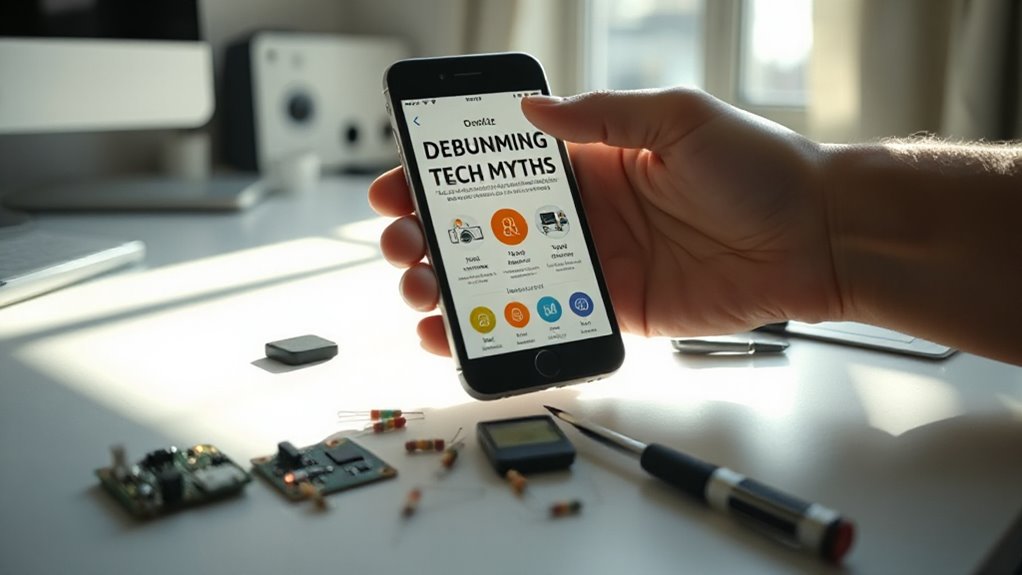

Many common electronics myths are false and can lead to unnecessary damage or frustration. For example, constantly charging your phone isn’t harmful, and letting batteries drain completely can cause harm. Using quality screen protectors and cases enhances durability, while frequent shutdowns won’t markedly save battery life. Understanding the truth about device care helps you avoid costly mistakes. Keep going to discover more about separating fact from fiction and keeping your gadgets in top shape.

Get your next haul delivered free — and shop member deals
- Fast, free delivery on millions of items
- Access to Prime Big Deal Days deals on October 6–7
- Prime Video, Amazon Music and more included
Key Takeaways
- Constant charging does not harm lithium-ion batteries; excessive discharging can cause long-term damage.
- Screen protectors and cases significantly improve device durability and can be nearly invisible.
- Turning devices off frequently offers minimal battery savings; managing settings is more effective.
- Fully draining batteries repeatedly reduces lifespan; keeping charge between 20% and 80% optimizes longevity.
- Understanding battery chemistry and proper care prevents unnecessary repairs and extends device performance.
Have you ever believed a piece of tech advice only to find out it wasn’t true? It’s easy to fall for myths about electronics, especially when so much information circulates online. One common misconception is that constantly charging your phone or letting the battery drain completely will extend its lifespan. The truth is quite the opposite. Modern devices use lithium-ion batteries, which perform best when kept between 20% and 80% charge. Continuously charging your phone isn’t harmful, but letting the battery drain to zero can cause long-term damage. Over time, this myth leads people to worry unnecessarily, potentially causing them to avoid charging their devices frequently. Proper charging habits help maintain *ideal* battery life, ensuring your device lasts longer and performs reliably. Additionally, understanding the role of battery chemistry can help you make smarter charging decisions.
Charging your phone constantly or letting the battery drain fully can harm lithium-ion batteries. Keep between 20% and 80% for best longevity.
Another widespread myth revolves around screen durability. Many believe that using a screen protector or a case makes a device more fragile or that they’re unnecessary. In reality, a well-made screen protector can *considerably* improve your device’s durability. It acts as a shield against scratches, cracks, and minor impacts. People often avoid screen protectors thinking they’ll interfere with display clarity or touch sensitivity, but high-quality options are designed to be virtually invisible while offering protection. Likewise, cases don’t weaken your device; they absorb shocks and distribute impacts, reducing the risk of damage. The myth that screens are inherently fragile leads many to be overly cautious, but with the right accessories, your device can withstand daily wear and tear much better than you might expect.
People also tend to believe that turning off their devices frequently saves battery life or extends screen durability. While turning off a device temporarily can conserve power in some situations, it’s not necessary for everyday use. Modern electronics are designed to handle continuous operation without *considerably* wear. Similarly, many think that avoiding certain apps or features will dramatically conserve battery life or protect the screen, but the actual impact is often minimal. Managing settings like brightness, background activity, or connectivity options yields more noticeable results.
In essence, these myths can lead you to make unnecessary or even counterproductive decisions about your devices. Understanding the facts about battery health and screen durability helps you care for your electronics more effectively. Instead of falling for exaggerated claims, use the right accessories, follow manufacturer recommendations, and adopt smart habits. That way, your devices will serve you well for years, and you’ll avoid spending money on unnecessary fixes or replacements. Clear, accurate information empowers you to make better choices and get the most out of your tech.
Frequently Asked Questions
Can Overcharging Damage My Smartphone Battery Permanently?
Overcharging your smartphone can contribute to battery degradation over time, but modern devices are designed to prevent damage from overcharging. When you leave your phone plugged in beyond 100%, it typically stops charging or slows down to protect the battery. Frequent charging cycles, rather than overcharging alone, impact battery health. To extend your battery’s lifespan, avoid constant full charges and unplug once it reaches 100%, reducing unnecessary wear.
Is It True That Leaving Devices Plugged in Harms Batteries?
Like Icarus flying too close to the sun, leaving your device plugged in isn’t as harmful as myths suggest. Modern batteries are designed with safety features that prevent overcharging, helping preserve battery lifespan. While unplugging once fully charged is good, keeping your device plugged in now and then won’t considerably harm the battery or compromise device safety. Trust the technology to manage itself, and focus on enjoying your device worry-free.
Do All Devices Need Regular Software Updates?
Yes, all devices need regular software updates. These updates are vital for device security, fixing vulnerabilities that hackers might exploit. By keeping your software current, you guarantee your device runs smoothly and stays protected from emerging threats. Don’t ignore those notifications — installing updates promptly helps safeguard your personal information and maintains peak performance, giving you peace of mind knowing your device is secure and functioning properly.
Is Using a Fast Charger Always Better for My Phone?
Using a fast charger isn’t always better for your phone. While it can quickly recharge your device, it may impact battery longevity over time. Fast charging generates more heat, which can accelerate battery wear and reduce its lifespan. If you prioritize battery health, use standard chargers or only rely on fast charging when needed. Balancing convenience and battery longevity helps ensure your phone stays in good shape longer.
Are Screen Protectors and Cases Necessary for Modern Electronics?
You definitely need screen protection and device casing—they’re your electronic armor in a world full of hazards! Modern electronics are sleek and fragile, and a good screen protector prevents scratches and cracks, while a sturdy case guards against drops and bumps. Skipping them is like leaving your device exposed to a hurricane without an umbrella. Protect your investment and keep your device looking new by choosing quality screen protection and a reliable device casing.
Conclusion
Don’t let these myths hold you back. For example, believing you always need to fully drain your battery can shorten its lifespan, but modern devices no longer require this. Instead, keep your devices charged between 20% and 80% for ideal health. By debunking these common myths, you’ll make smarter decisions, extend your gadgets’ life, and avoid unnecessary stress or expenses. Stay informed, and don’t fall for outdated tech advice.
Fall Picks
fall essentials
As an affiliate, we earn on qualifying purchases.