
To build a budget gaming PC, choose a mid-range CPU and GPU for smooth 1080p gaming, balancing performance and cost. Pick reliable, affordable motherboards and RAM, and look for deals on hardware. Upgrade components gradually and consider used or refurbished parts from trusted sources. Focus on a balanced system to prevent bottlenecks and leave room for future upgrades. With thoughtful choices, you can enjoy great gaming without overspending—keep exploring for more tips to maximize your build.
Open a free Amazon Business account
Business pricing, bulk buying and tax-exempt orders.
As an affiliate, we earn on qualifying purchases.
Key Takeaways
- Prioritize mid-range CPU and GPU to balance performance and cost for 1080p gaming.
- Choose motherboards with extra RAM and PCIe slots for easy future upgrades.
- Take advantage of deals, discounts, and consider used or refurbished parts to save money.
- Build gradually, focusing on core components first, then upgrade peripherals later.
- Select reliable, budget-friendly peripherals with good reviews to enhance gaming comfort without overspending.
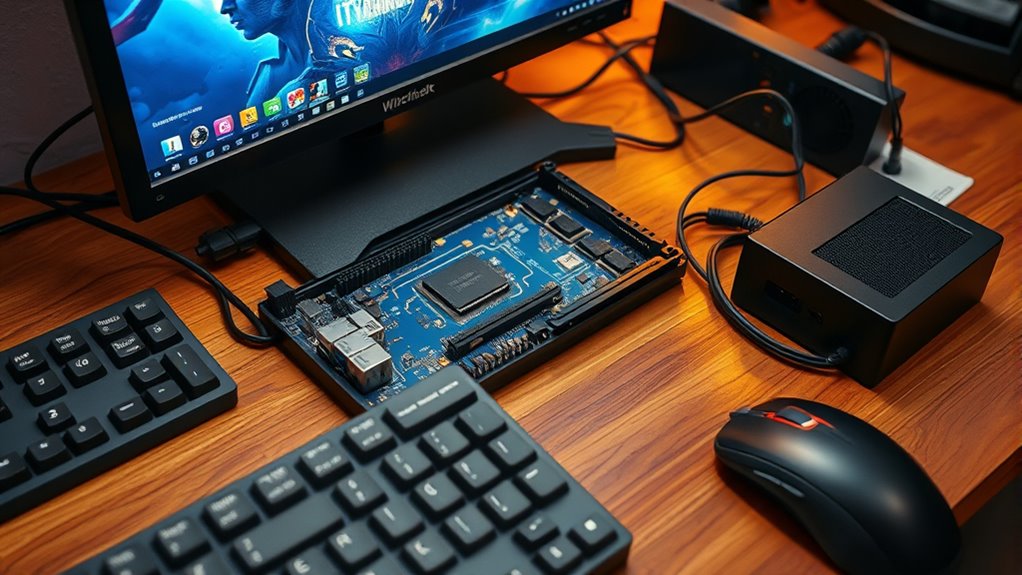
Building a budget gaming PC is a great way to enjoy your favorite titles without breaking the bank. You don’t need to spend a fortune to get solid performance, especially if you focus on smart choices and strategic upgrades. One of the best ways to stretch your budget is by prioritizing cost effective upgrades. Instead of splurging on top-of-the-line hardware, look for components that offer the best performance-to-price ratio. For example, opt for a mid-range CPU and GPU that can handle most modern games at 1080p, then upgrade later if needed. Choosing a reliable but affordable motherboard and RAM can also save money, leaving more room in your budget for essential parts.
Another area where you can save is in gaming peripherals. You don’t have to buy the most expensive keyboard, mouse, or headset to enjoy a great gaming experience. There are plenty of budget-friendly options that deliver excellent performance, durability, and comfort. Look for peripherals with good reviews, responsive keys, and decent sound quality. This way, you get the most out of your setup without overspending. Remember, peripherals can also be upgraded later on, so start with what’s functional and comfortable for you now, then improve as your budget allows.
When building your PC, focus on balancing your components. For example, pairing a powerful GPU with a weaker CPU can bottleneck your system, so aim for a balanced build that maximizes performance within your budget. Don’t forget to consider future upgrades; choosing a motherboard with extra RAM slots or additional PCIe slots can make upgrading easier down the line. This keeps your initial investment lower while still giving you room to improve your gaming rig over time. Additionally, selecting components with good color accuracy can enhance your visual experience, especially if you plan to enjoy both gaming and multimedia content on your setup.
Keep an eye out for deals and discounts on hardware. Retailers often have sales on CPUs, GPUs, and even peripherals, which can drastically cut costs. Used or refurbished parts can also be a smart move if you’re comfortable with it, provided you buy from reputable sources. Building your PC gradually, starting with the core components and adding peripherals later, allows you to manage expenses without sacrificing quality.
In essence, building a budget gaming PC isn’t about cutting corners; it’s about making smart choices that give you good performance for less. By focusing on cost effective upgrades and selecting reliable, budget-friendly peripherals, you’ll set yourself up for a satisfying gaming experience that fits your wallet. With patience and some research, you can craft a rig that plays today’s titles well and leaves room for future improvements.
As an affiliate, we earn on qualifying purchases.
Frequently Asked Questions
How Can I Upgrade My Budget Gaming PC in the Future?
To upgrade your budget gaming PC in the future, start by researching future upgrade options and ensuring your current components are compatible with upcoming hardware. Focus on upgrading critical parts like the GPU or RAM first, as they’re most impactful. Keep an eye on the motherboard’s upgrade path and choose a compatible power supply. Regularly check for new budget components that fit your system to maximize performance without overspending.
What Are the Best Budget Peripherals for Gaming?
Your gaming setup needs first-rate peripherals that won’t break the bank, and you’re in luck! Wireless keyboards give you flexibility and clutter-free gaming, while RGB mice add style and precision without costing a fortune. Look for budget-friendly options that offer durability and responsiveness, so you can dominate the game without draining your wallet. These peripherals turn your gaming experience from average to epic, all without breaking your budget!
How Do I Optimize Game Settings for Better Performance?
To optimize game settings for better performance, start by lowering your game resolution to reduce the load on your system. Next, tweak graphic settings—set things like shadows, textures, and effects to medium or low. Disable V-Sync if you’re experiencing input lag. These adjustments help your PC run smoother, giving you a more enjoyable gaming experience without needing upgrades. Keep testing until you find a balance between visual quality and performance.
Are Used Components Reliable for a Gaming Build?
Think used components are unreliable? Think again. While some reliability concerns exist, carefully selecting tested parts can save you money without sacrificing performance. Always buy from reputable sellers, check for warranties, and inspect components thoroughly. Used components can be just as dependable as new if you do your homework. So, don’t dismiss them outright—just be cautious, and you’ll build a solid gaming PC on a budget.
What’s the Average Lifespan of a Budget Gaming PC?
Your budget gaming PC typically lasts around 3 to 5 years, depending on how well you maintain it and the quality of your budget components. As technology advances, gaming lifespan may decrease, but with upgrades like adding more RAM or a new GPU, you can extend its usability. Keep in mind, regular cleaning and updates help maximize your gaming experience and prolong your PC’s lifespan.
affordable gaming motherboard with extra RAM slots
As an affiliate, we earn on qualifying purchases.
As an affiliate, we earn on qualifying purchases.
Conclusion
Now, your budget gaming PC is like a sturdy ship ready to sail the vast seas of gaming. With each component, you’ve crafted a vessel that punches above its weight, proving that great adventures don’t need a treasure chest. As you power it up, imagine igniting a spark that fuels endless journeys and victories. Your humble craft is now a gateway—proof that with clever choices, even a modest build can conquer the digital world.
refurbished mid-range graphics card
As an affiliate, we earn on qualifying purchases.
As an affiliate, we earn on qualifying purchases.
budget-friendly gaming peripherals
As an affiliate, we earn on qualifying purchases.
As an affiliate, we earn on qualifying purchases.
Fall Picks
fall essentials
As an affiliate, we earn on qualifying purchases.