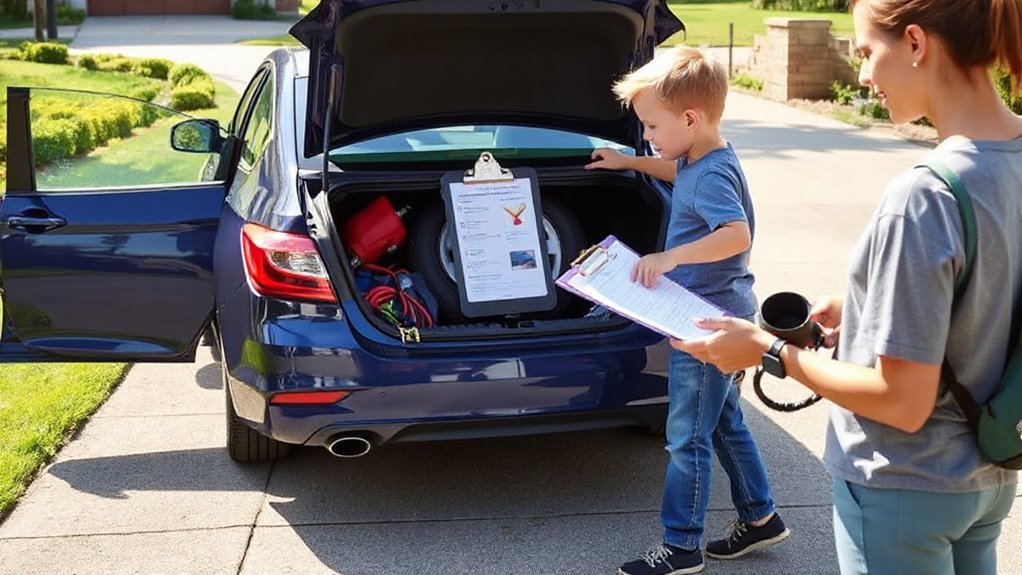

To prepare your car affordably for a long drive, start by checking tire pressure and tread depth to improve safety and fuel economy. Inspect your fluids—oil, coolant, and windshield washer—topping off or replacing as needed. make certain your safety equipment, like jumper cables and a tire gauge, are in good shape, and replace worn windshield wipers. Confirm your vehicle’s overall condition, including battery and brakes, so you can enjoy a stress-free trip; more tips are just ahead.

Get your next haul delivered free — and shop member deals
- Fast, free delivery on millions of items
- Access to Prime Big Deal Days deals on October 6–7
- Prime Video, Amazon Music and more included
Key Takeaways
- Check and inflate tires to proper pressure using a free or low-cost pressure gauge.
- Top off essential fluids like oil, coolant, and windshield washer with affordable store-bought supplies.
- Inspect and replace worn windshield wipers and ensure lights are clean and functioning for better visibility.
- Pack a basic emergency kit with inexpensive items such as jumper cables, a flashlight, and bottled water.
- Review vehicle documentation and perform simple maintenance tasks to ensure safety without costly repairs.
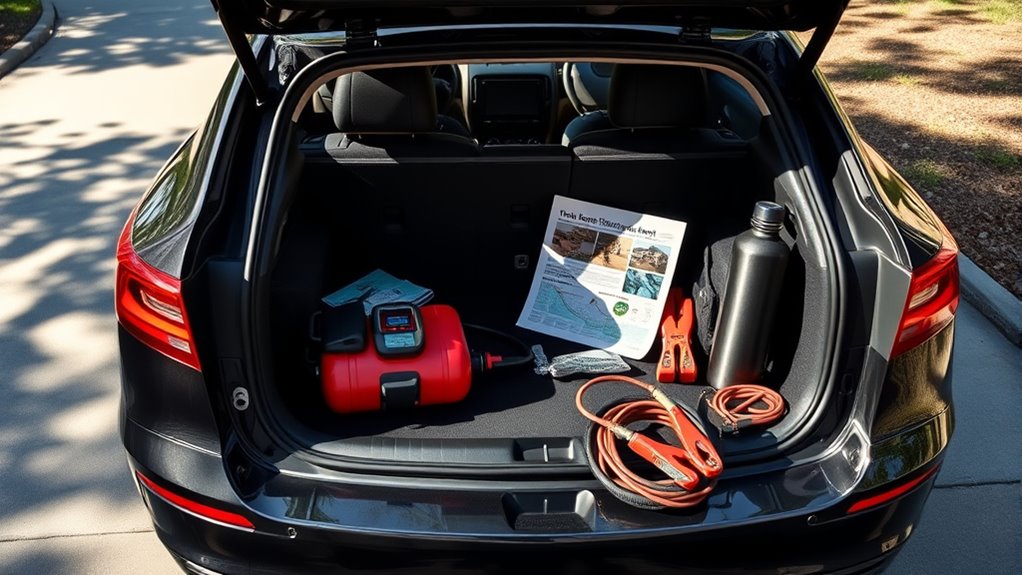
Planning a road trip can be exciting, but guaranteeing your car is ready is essential to avoid surprises along the way. Taking time to do some basic vehicle maintenance before you hit the road can save you from unexpected breakdowns or delays. Start by checking your tire pressure and tread depth. Properly inflated tires improve fuel efficiency and ensure safe handling, especially over long distances. Don’t forget to inspect your spare tire, jack, and lug wrench, so you’re prepared if a flat occurs. Next, review your vehicle’s fluid levels—oil, coolant, brake fluid, and windshield washer fluid. Top off or replace any that are low, as these are crucial for your engine’s health and visibility during the trip.
A well-maintained vehicle is less likely to break down, but it’s also wise to prepare an emergency kit. Your kit should include essentials like a flashlight, batteries, first aid supplies, non-perishable snacks, bottled water, and basic tools such as pliers and screwdrivers. Consider adding jumper cables, a tire pressure gauge, and a tow rope. These items can help you handle minor issues or assist others in need. Keep your emergency kit easily accessible in the vehicle—preferably in the trunk or a dedicated compartment—so you can reach it quickly if an emergency arises.
Before departing, also verify that your brakes are responsive and that your battery is in good condition. If your battery is old or showing signs of weakness, replacing it beforehand can prevent inconvenient breakdowns on the road. Additionally, check your air conditioning or heating system to ensure a comfortable ride no matter the weather. Clean your windshield and headlights for clear visibility, and ensure your windshield wipers are in good condition. Replacing worn wipers is a simple, inexpensive way to improve your driving safety.
It’s also helpful to familiarize yourself with vehicle safety standards and ensure your vehicle adheres to them, which can further prevent issues during your trip. Finally, plan your route, but also have backup options in case of road closures or traffic. Make sure your navigation device or app is updated. Double-check that your insurance and registration are current, and keep copies in your glove compartment. Taking these affordable, straightforward steps doesn’t just protect your vehicle—it also boosts your confidence and peace of mind, letting you focus on enjoying the trip. Proper vehicle maintenance combined with a well-stocked emergency kit means you’re prepared for whatever the road throws your way, making your adventure safer and more enjoyable from start to finish.
As an affiliate, we earn on qualifying purchases.
Frequently Asked Questions
How Often Should I Check Tire Pressure Before a Long Drive?
You should check your tire pressure at least once a month and before any long drive. Follow tire pressure tips like checking when tires are cold for accurate readings. Regular checking of tire pressure helps prevent blowouts and improves fuel efficiency. Before your trip, make certain your tires are properly inflated, and don’t forget to check again during the drive if you’re on a very long journey.
What’s the Best Way to Test My Car’s Brakes?
To test your brakes, start by pressing the brake pedal firmly while the engine is off; it should feel firm and not sink. Check your brake fluid level—if it’s low, top it up. Listen for any squealing or grinding noises, which indicate worn brake pads. If you notice vibrations or reduced braking power, schedule a professional inspection. Regularly inspecting brake fluid and pads guarantees your brakes stay reliable on long trips.
How Can I Improve Fuel Efficiency for a Road Trip?
To improve fuel efficiency for your road trip, practice eco-friendly driving by maintaining steady speeds and avoiding rapid acceleration or braking. Follow fuel-saving tips like keeping your tires properly inflated, removing excess weight, and using cruise control on highways. These small adjustments help your engine run more efficiently, saving fuel and reducing emissions. Staying mindful of your driving habits guarantees you get the most out of every gallon, making your trip both economical and environmentally friendly.
Are There Any Hidden Safety Features I Should Verify?
Imagine your car as a vigilant guardian on the road, constantly watching for dangers. Verify hidden safety features like blind spot detection to alert you of nearby vehicles and electronic stability control to keep you steady on winding roads. Check that these systems are functioning properly, ensuring they’re ready to protect you. Doing so transforms your vehicle into a safer, more confident companion for your long journey ahead.
How Do I Prepare My Car for Unexpected Weather Conditions?
You should prepare your car for unexpected weather by packing an emergency kit with essentials like blankets, flashlights, and non-perishable snacks. Keep an eye on weather alerts before and during your trip to stay informed about potential storms or icy conditions. Additionally, verify your windshield wipers, tires, and brakes are in good shape to handle sudden weather changes, keeping you safe no matter what Mother Nature throws your way.
As an affiliate, we earn on qualifying purchases.
Conclusion
So, you’ve saved money on prep, hoping to enjoy the road without worries. Ironically, neglecting a few simple checks might turn your dream trip into a roadside saga. But hey, who needs peace of mind when you can embrace the unpredictability? Just remember, a little investment now can save you from costly surprises later. After all, the true adventure begins when your car’s ready—so why not give it the best shot? Safe travels!
windshield wiper blades replacement
As an affiliate, we earn on qualifying purchases.
As an affiliate, we earn on qualifying purchases.
As an affiliate, we earn on qualifying purchases.
Fall Picks
fall essentials
As an affiliate, we earn on qualifying purchases.