

Extended car warranties can give you peace of mind by covering expensive repairs and protecting your finances. However, they can also drain your money if you don’t take into account coverage options, provider reputation, and your vehicle’s reliability. Keep exploring to discover how to make smart decisions when it comes to extended warranties.
Key Takeaways
- Extended warranties can provide financial security by covering costly repairs after the manufacturer’s warranty expires.
- Carefully compare plans to ensure coverage aligns with your vehicle’s age, mileage, and reliability to avoid unnecessary expenses.
- Reputable providers with strong customer reviews and good claims processes reduce the risk of denied coverage and hidden costs.
- Overly affordable plans may offer limited coverage, while more comprehensive options are pricier but better protect against major issues.
- Read the fine print to understand exclusions and limitations, ensuring the warranty offers genuine peace of mind rather than money drain.
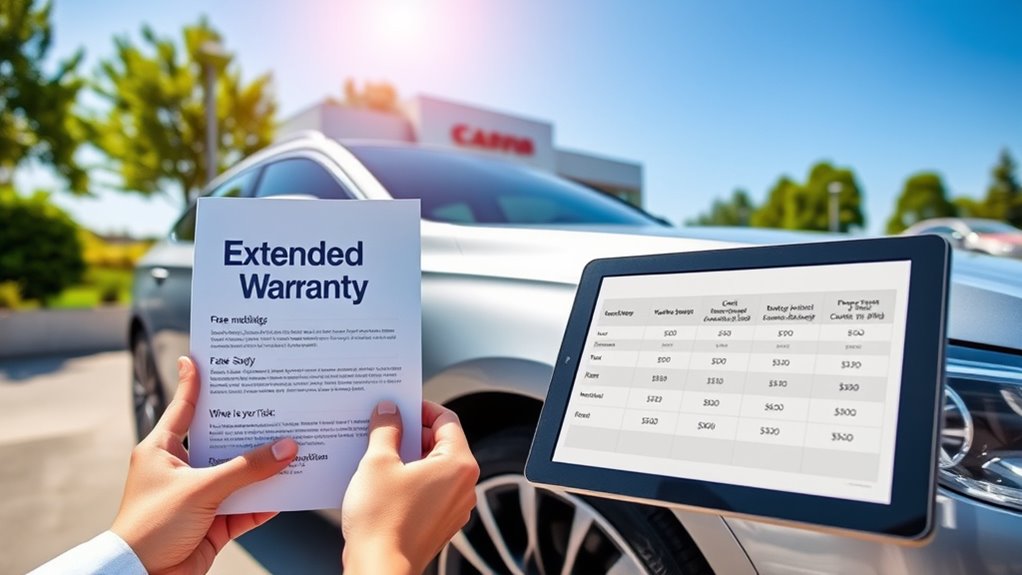
An extended car warranty can provide peace of mind by covering repair costs after your manufacturer’s warranty expires. But before jumping in, it’s essential to weigh the cost versus coverage. You want to ensure you’re getting enough protection without overspending on unnecessary extras. Some plans might seem affordable upfront but end up offering limited coverage, leaving you to pay for major repairs out of pocket. Conversely, higher-priced plans often promise comprehensive coverage, but it’s important to verify if they truly cover the issues that could arise with your specific vehicle. Look closely at what’s included and excluded—this helps you determine if the plan is worth the investment.
Another vital factor is the provider’s reputation. A company with a solid track record for customer service and prompt claims processing can make all the difference when you actually need help. Do your research: check online reviews, ask for recommendations, and verify their standing with consumer protection agencies. A reputable provider is less likely to deny valid claims or impose confusing restrictions, saving you frustration and unexpected expenses down the line. Remember, an extended warranty isn’t just about the coverage details; it’s also about trusting the company behind it.
Choose a provider with a strong reputation for customer service and reliable claims processing for peace of mind.
You’ll also want to compare plans from different providers, focusing on how they balance cost and coverage. Some companies offer basic plans that are cheaper but only cover major components, leaving you to pay for minor repairs. Others might have more inclusive packages that cover a broader range of issues, though at a higher price point. Decide what’s most important based on your vehicle’s age, mileage, and reliability history. If your car is newer and under warranty, a basic plan might suffice. But if it’s older or has known issues, a more detailed coverage plan could save you money in the long run.
Ultimately, choosing an extended warranty involves evaluating your risk tolerance and financial situation. A lower-cost plan with limited coverage might seem attractive initially but could leave you exposed if a major part fails. On the other hand, investing in a more detailed plan from a reputable provider might cost more upfront but provide peace of mind when unexpected repairs strike. Take your time to compare options, scrutinize the fine print, and prioritize providers with solid reputations. That way, you’re more likely to find a plan that offers good value and genuine protection, rather than just paying for coverage you don’t need. Additionally, understanding the stability and reliability of batteries and other components can influence your decision, especially for vehicles with longer-term ownership plans.
Frequently Asked Questions
Can I Purchase an Extended Warranty After My Vehicle’s Initial Warranty Expires?
Yes, you can purchase an extended warranty after your vehicle’s initial warranty expires. Many providers offer renewal options or plans designed for vehicles beyond their original coverage. It’s important to compare costs and coverage details, as some warranties may have restrictions or exclusions once the original warranty ends. Act quickly to secure coverage, and always read the terms carefully to make certain it fits your needs and budget.
Are There Any Hidden Fees Associated With Extended Car Warranties?
Think of extended warranties like a treasure map—hidden fees could be the tricky dead ends. Usually, you won’t see these in the broad promises, but warranty exclusions and fine print can hide costs for things you assumed were covered. Always read the details carefully; some companies charge extra for repairs or service fees. You might pay more than expected if you don’t scrutinize the fine print upfront.
How Do I File a Claim With My Extended Warranty Provider?
To file a claim with your extended warranty provider, start by contacting their claims department through phone or online portal. You’ll need to follow the claim process outlined in your warranty agreement, which typically includes providing documentation requirements like repair bills, proof of service, and your warranty contract. Make sure to review your policy details beforehand to guarantee you gather all necessary paperwork and submit your claim promptly.
What Is the Average Cost of an Extended Car Warranty?
Coincidentally, the average cost of an extended car warranty varies between $1,200 and $4,000, depending on your vehicle and coverage options. You’ll want to do a thorough cost comparison, considering factors like deductibles and included repairs. Keep in mind that better coverage options often come with higher prices, but they might save you money in the long run if unexpected repairs occur.
Does an Extended Warranty Cover Routine Maintenance and Repairs?
An extended warranty usually doesn’t cover routine maintenance like oil changes or tire rotations. It focuses on repair coverage for unexpected mechanical issues, but keep in mind, there are often repair exclusions, such as damage from accidents or neglect. To avoid surprises, carefully review what’s included in your plan, so you know whether routine coverage is provided or if you’ll need to handle those costs separately.
Conclusion
Ultimately, deciding on an extended car warranty is like choosing whether to carry an umbrella in a storm—you might avoid the downpour, or end up drenched in expenses. It’s a gamble that could save you from shocking repair bills or drain your wallet for little benefit. Weigh the costs and coverage carefully, and remember: a well-chosen warranty can be your shield against unexpected breakdowns, but don’t let it drain your pockets like a leaky faucet.