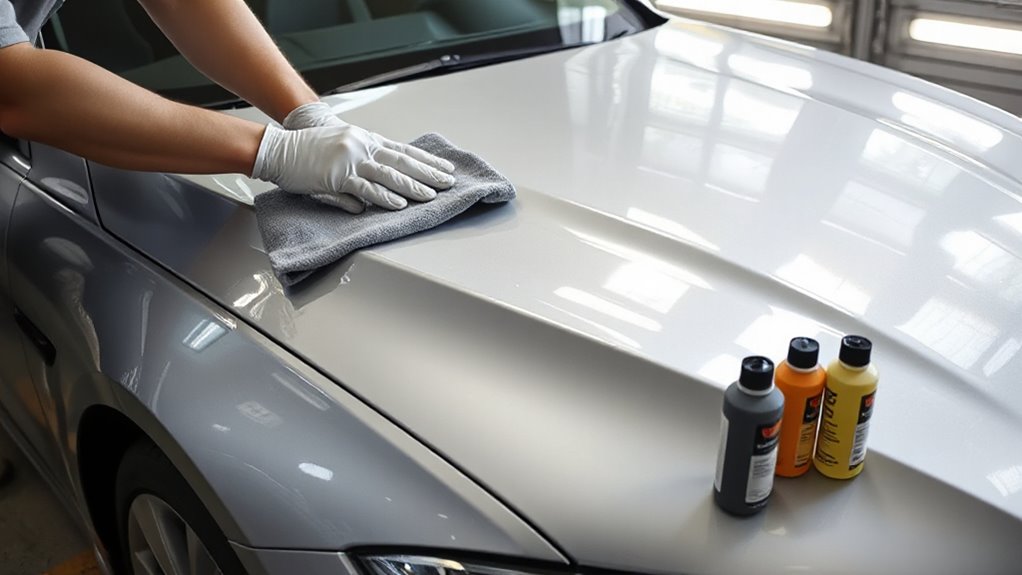

You can make your ride shine without a pro by starting with a thorough interior cleaning using microfiber cloths and vacuuming to remove dirt, then tackling stubborn stains with gentle cleaners. For the exterior, wash with a dedicated car soap, dry with a microfiber towel, and polish to enhance gloss and protection. Doing these simple steps regularly keeps your vehicle looking great and maintains its value—keep going to discover more expert tips.
Key Takeaways
- Gather essential cleaning supplies like microfiber cloths, vacuum, and gentle cleaning solutions for interior and exterior care.
- Vacuum and wipe down all interior surfaces, including seats, carpets, and dashboard, to remove dust and grime.
- Use proper car wash soap and soft mitts to rinse and dry the exterior, avoiding household detergents that can damage paint.
- Apply polish in small sections to restore shine, protect the paint, and eliminate scratches for a polished look.
- Regular DIY detailing maintains vehicle appearance, saves money, and protects your car’s paint and interior surfaces.

Cleaning and maintaining your car doesn’t have to be expensive or require professional help. With a little effort and the right supplies, you can give your vehicle a fresh, polished look right in your driveway. Starting with interior cleaning, you’ll want to gather a few basic tools like a microfiber cloth, a vacuum cleaner, and some mild cleaning solutions. First, remove all trash and personal items from inside the car. Then, vacuum the seats, carpets, and floor mats thoroughly to pick up dust, dirt, and debris. For hard-to-reach areas like under the seats and between cushions, use attachment tools to get every bit of dirt out. Once the loose dust is gone, wipe down surfaces such as the dashboard, steering wheel, and door panels with a damp microfiber cloth. For stubborn stains or grime, use a gentle interior cleaner that’s safe for plastics and upholstery. Pay attention to the vents, buttons, and seams, ensuring no dust or dirt is left behind. This simple interior cleaning markedly improves the look and feel of your vehicle’s inside.
Moving to the exterior, start by washing the car with a dedicated car wash soap and a soft sponge or mitt. Avoid household detergents, as they can strip wax or damage paint. Rinse thoroughly, removing all loose dirt and grime. Once clean, dry the surface with a microfiber towel to prevent water spots. To really make your car shine, apply an exterior polish. This step evens out minor scratches, enhances the paint’s gloss, and provides a protective layer against the elements. Use a clean, soft cloth or applicator pad to spread the polish evenly in small circular motions. Work in sections, then buff to a high shine with a clean microfiber cloth. Not only does this process restore your car’s color, but it also helps protect the paint from future damage.
Frequently Asked Questions
How Often Should I Detail My Car at Home?
You should detail your car at home every 4 to 6 weeks to keep it looking its best. During this time, focus on interior cleaning to remove dust and stains, and apply waxing techniques to protect the paint and enhance shine. Regular detailing prevents dirt buildup and maintains your car’s value. Adjust frequency based on usage and weather conditions, but don’t neglect your car’s interior and exterior for long periods.
What Tools Are Essential for DIY Car Detailing?
Imagine your car as a blank canvas—what tools will bring out its true shine? You’ll need essentials like car wax for that glossy finish and microfiber towels to buff away dust and streaks. A good wash mitt, a wheel brush, and interior cleaners also make a difference. With these tools, you’re all set to achieve professional results at home, making your ride look stunning every time.
Can I Use Household Products for Cleaning My Car?
You can use household chemicals for cleaning your car, but be cautious. Many household products, like dish soap or glass cleaner, work well for natural cleaning and won’t damage your vehicle if used properly. Avoid harsh chemicals like bleach or ammonia, which can harm the paint or interior. Always dilute household cleaners and test a small area first to verify they’re safe for your car’s surfaces.
How Do I Prevent Scratches During Washing?
Did you know that improper washing causes 60% of paint scratches on cars? To prevent scratches, use gentle washing techniques like two-bucket methods and microfiber cloths. Always rinse your vehicle thoroughly before washing, and avoid circular motions. Focus on scratch prevention by applying light pressure and using quality products. These steps help protect your paint and keep your car looking shiny without risking damage.
Is DIY Detailing Cost-Effective Compared to Professional Services?
DIY detailing is generally more cost-effective than professional services, especially if you already own basic supplies. You save on labor costs and can space out your cleanings to fit your budget. To keep costs low, use budget tips like purchasing multi-purpose products and doing thorough prep work. While professionals offer convenience, doing it yourself lets you control expenses and customize your detailing routine, making it a smart budget-friendly choice.
Conclusion
With a little effort and the right tools, you can achieve a professional-looking shine right at home. Some might think it’s too time-consuming or tricky, but once you get the hang of it, detailing becomes quick and rewarding. Plus, you’re saving money and gaining pride in your ride. So don’t hesitate—grab your supplies and start today. Your car will thank you, and you’ll love the fresh, spotless look only DIY can deliver.