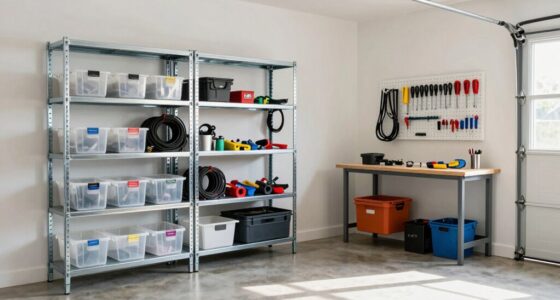
When shopping for a tool chest, focus on your current tools and storage needs to avoid unnecessary features and overbuying. Set a clear budget and look for quality options with sturdy construction and essential features, like multiple drawers and smooth slides. Choose a size that fits your tools now and leaves room for growth. Keep it simple and practical to prevent clutter. To get more tips, the details ahead will guide you through making the best choice.

Get your next haul delivered free with Prime
- Fast, free delivery on millions of items
- Prime Video, Amazon Music and more included
- Member-only deals all year
Key Takeaways
- Assess your current tools and storage needs to choose a size that fits without excess space.
- Avoid high-end features if they’re unnecessary; prioritize essential, practical functionalities.
- Set a clear budget beforehand and explore discounts or refurbished options to maximize value.
- Select a durable, well-reviewed chest with sturdy construction and reliable locking mechanisms.
- Opt for scalable, modular storage solutions to accommodate future growth without overinvesting initially.

Choosing the right tool chest can markedly improve your workspace organization and efficiency. When you’re shopping, it’s essential to focus on your storage organization needs first. Think about how many tools you have and what types you use most often. Do you need drawers for small parts or compartments for power tools? Knowing what you need helps you avoid buying extra features that won’t serve your workflow. It’s tempting to go for the biggest, most feature-rich chest, but that can lead to overbuying and clutter. Instead, consider a size that fits your current collection, with room to grow gradually. This approach ensures you won’t end up with overbuying unnecessary features, saving you money and space. It’s also helpful to consider how the storage layout will work with your existing workspace setup. This way, you keep your workspace tidy and avoid spending money on storage options you won’t use. Additionally, understanding storage organization principles can help you optimize your tool chest for maximum efficiency and accessibility. Incorporating modular storage solutions can enhance flexibility, allowing you to customize your setup as your collection evolves.
Choose a tool chest that fits your current tools and allows for future growth to keep your workspace organized.
Budget planning plays a vital role when choosing a tool chest. Set a clear spending limit before you start browsing. This keeps you from being tempted by high-end models that exceed your financial comfort zone. Remember, a more expensive chest isn’t always better for your needs. Focus on what’s necessary for your projects and avoid features that won’t add value to your day-to-day tasks. Look for options that strike a balance between quality and affordability. Sometimes, a well-made mid-range chest provides everything you need without the extra cost of premium features. Keep an eye out for sales, discounts, or refurbished models to stretch your budget further.
When shopping, prioritize durability and construction quality. A sturdy steel frame with solid locking mechanisms will protect your tools and last longer, saving you money in the long run. Check out customer reviews to gauge reliability and ease of use. Don’t fall for flashy extras that add to the price but don’t improve functionality. Instead, focus on essential features like multiple drawers, smooth slides, and sufficient weight capacity. Remember, you want a tool chest that’s practical and fits your current and future needs without overwhelming your workspace or your budget.
Products Worth Considering

FLEXISPOT Electric Height-Adjustable Drafting Table with Tilting Top and Drawer

Logitech MX Keys S Combo Wireless Keyboard and Mouse, Graphite

Apple MacBook Air 13.6-inch with M5 chip, 16GB Memory, 512GB SSD, Midnight
As an affiliate, we earn on qualifying purchases.
Frequently Asked Questions
What Is the Average Lifespan of a Tool Chest?
A typical tool chest lasts around 10 to 15 years with proper maintenance. Regular tool chest maintenance, like cleaning and oiling, can extend its lifespan. To avoid overspending, consider budget-friendly options that still offer durability and good storage. Keep an eye on the material quality and construction, and avoid cheap materials that may rust or break quickly. Proper care guarantees you get the most out of your investment.
Are There Eco-Friendly Tool Chest Options Available?
Yes, you can find eco-friendly tool chests made from sustainable materials and coated with eco-friendly finishes. These options are as rare as a unicorn, but they’re out there. Look for chests with recycled steel or sustainably sourced wood, and check for non-toxic, eco-conscious coatings. By choosing these, you help protect the planet while keeping your tools organized, proving that sustainability can be both stylish and practical.
How Do I Determine the Best Size for My Workspace?
You should measure your workspace carefully to determine the best size for your tool chest. Consider your storage organization needs and how much space you’ll require for tools and accessories. Opt for a chest that fits comfortably without overcrowding, ensuring space optimization. A well-sized tool chest helps you stay organized while leaving room for movement and other equipment, making your workspace safer and more efficient.
Can Tool Chests Be Customized for Specific Tools?
Think of a tool chest as a tailored suit—perfectly fitted to your needs. Yes, many chests come with customization options, allowing you to organize your tools precisely. Modular designs act like building blocks, letting you add or rearrange compartments as your collection grows. This flexibility guarantees your tool chest adapts seamlessly to your workflow, turning chaos into harmony and making every tool easily accessible.
What Security Features Should I Consider?
When choosing a tool chest, consider security features like sturdy security locks to protect your tools. Look for a chest that offers reliable locking mechanisms, such as keyed or combination locks. Additionally, check if it’s compatible with padlocks for added security. These features help prevent theft and keep your tools safe. Prioritize durability and ease of access, ensuring your investment is secure and convenient for your needs.
Conclusion
Remember, shopping for a tool chest isn’t about throwing money at the problem. Take your time, weigh your options, and focus on what you truly need. Don’t let flashy features or big brands sway you into overbuying—sometimes, less is more. Keep your eye on the prize and avoid biting off more than you can chew. With a little patience, you’ll find the perfect storage solution that keeps your tools organized without breaking the bank.