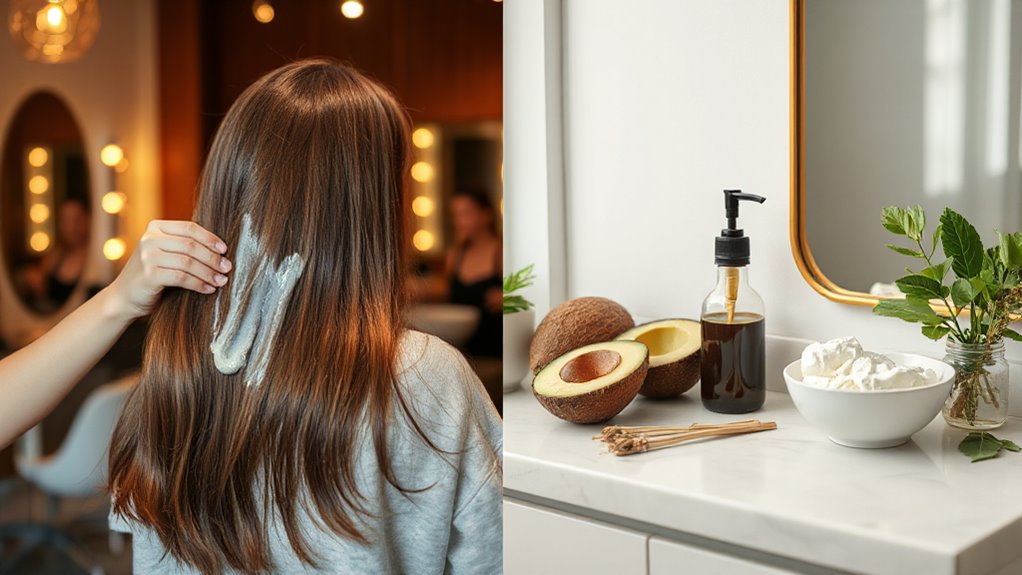

Opting for DIY home remedies for your hair can save you a lot compared to costly salon treatments. Natural ingredients like coconut oil, honey, and lemon are affordable, easy to find, and customizable to suit your needs. They effectively nourish, strengthen, and clarify hair without harsh chemicals. With consistent use, you can see impressive results while staying within your budget. Keep exploring how you can make the most of these simple, cost-effective solutions for healthier hair.
Key Takeaways
- DIY remedies are more affordable than costly salon treatments, making hair care budget-friendly.
- Natural ingredients for home treatments are easily available and customizable to specific hair needs.
- Homemade solutions avoid expensive chemicals, reducing costs and potential scalp or hair damage.
- DIY treatments offer long-term benefits and sustainability compared to quick salon fixes.
- Regular use of natural remedies can maintain hair health effectively without financial strain.
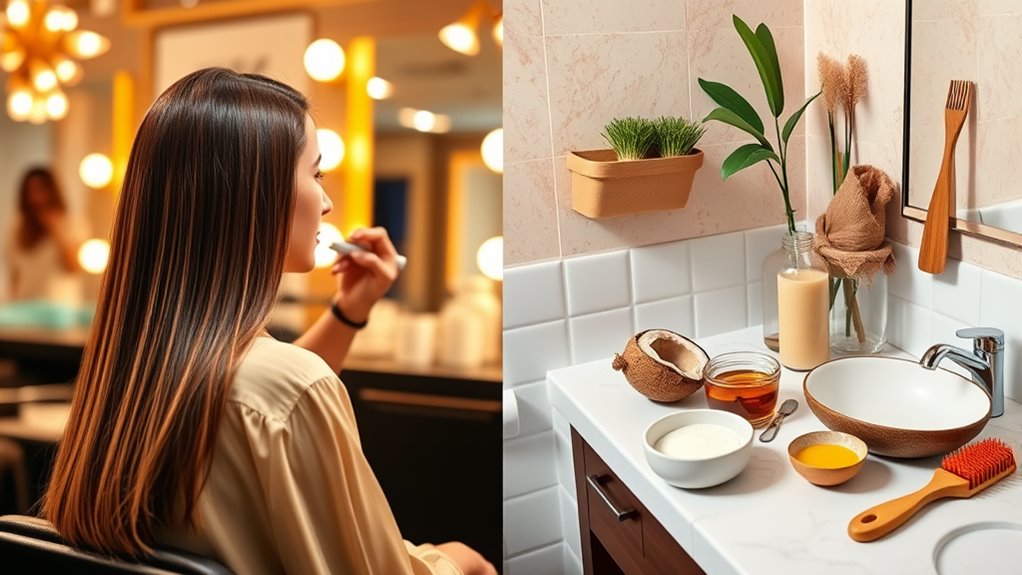
Are you looking for ways to keep your hair healthy without breaking the bank? If so, exploring budget-friendly options that use natural ingredients can be a game-changer. Professional salon treatments often come with a hefty price tag, but you don’t need to spend a fortune to nourish your hair effectively. Many effective remedies are right in your kitchen or local store, offering natural ingredients that deliver real results without draining your wallet. This approach not only saves money but also allows you to control what goes into your hair care routine, avoiding harsh chemicals and preservatives found in some commercial products.
DIY home remedies made from natural ingredients are surprisingly simple to prepare and can be tailored to your specific hair needs. For example, coconut oil is a popular, budget-friendly option that deeply moisturizes and strengthens hair. You can warm a small amount and apply it as a pre-shampoo treatment or leave it in overnight. Similarly, honey acts as a natural humectant, locking in moisture and giving your hair a healthy shine. Mixing honey with a bit of olive oil creates an affordable, nourishing mask that’s easy to apply and rinse out. Avocado is another versatile natural ingredient packed with vitamins and healthy fats that promote hair growth and repair damage. Mashed avocado can be combined with yogurt or olive oil for a nourishing hair mask that’s both effective and inexpensive.
Lemon juice is excellent for clarifying your scalp and removing excess oil, making it an affordable alternative to costly clarifying shampoos. Apple cider vinegar, diluted with water, can restore your hair’s pH balance and add shine, all while saving you money. Baking soda also works as a gentle cleaning agent that can help remove buildup and refresh your hair at a fraction of the cost of commercial clarifiers. These natural ingredients are not only budget-friendly options but also gentle on your hair and scalp, reducing the risk of irritation or damage. Additionally, understanding the natural ingredients used in DIY remedies can help you tailor treatments precisely to meet your hair’s needs.
Using natural ingredients for your hair care routine empowers you to create personalized treatments that fit your budget. You can experiment with different combinations to address specific concerns like dryness, dandruff, or scalp sensitivity without relying on pricey salon treatments. While salon treatments can offer quick, sometimes impressive results, they often come at a premium. On the other hand, homemade remedies using natural ingredients are accessible, cost-effective, and sustainable. With a little effort and some common kitchen staples, you can keep your hair healthy, shiny, and vibrant without overspending. It’s a smart way to prioritize your hair’s health while staying within your budget.

ANERZA 16 PCS Sage Green Wall Art Decor, Matisse Wall Prints for Bedroom, Abstract Posters for Room Aesthetic, Wall Collage Kit Pictures for Living Room, Eclectic Boho Vintage Dorm Gallery Home Decor
- Universal Home Decor: Fits any home style
- Vivid Sage Green Prints: Enhances walls with calming hues
- High-Quality Printing: Semi-gloss textured finish
As an affiliate, we earn on qualifying purchases.
Frequently Asked Questions
Are DIY Remedies Safe for All Hair Types?
DIY remedies can be safe for many hair types if you choose natural ingredients and avoid harsh chemicals. However, they aren’t always suitable for everyone, especially if you have sensitive or chemically treated hair. You should test a small patch first and research your specific hair needs. Remember, natural remedies can sometimes cause allergic reactions or damage if misused, so proceed with caution and consult a professional if unsure.
How Often Should I Try Salon Treatments Versus DIY?
You should try salon treatments every 4 to 8 weeks, depending on your hair’s needs, for professional care and better results. DIY remedies are best for weekly or bi-weekly use, offering cost-effective and convenient options you can do at home. Balancing both allows you to save money while maintaining healthy hair, using salon treatments for deep fixes and DIYs for regular upkeep, considering both cost comparison and convenience factors.
Can DIY Treatments Match Salon Results Long-Term?
Coincidences happen, and sometimes DIY treatments can match salon results long-term, especially if you carefully consider cost comparison and ingredient sourcing. While salons offer professional expertise, you can achieve comparable results at home with quality ingredients and consistent routines. However, it takes dedication and knowledge. You might save money over time, but make sure your DIY recipes are well-researched to truly match salon-quality outcomes.
What Ingredients Are Best for Homemade Hair Masks?
For homemade hair masks, natural oils like coconut, argan, and olive oil work wonders to nourish and hydrate your hair. You should also try protein masks with ingredients like eggs, yogurt, or honey to strengthen your strands. These ingredients are easy to find and cost-effective, giving you a natural, effective treatment at home. Regular use can improve your hair’s shine and strength, making DIY masks a great long-term option.
Are There Risks of DIY Treatments Damaging Hair?
Think of DIY hair treatments as a garden: without proper care, weeds or pests can damage your plants. Similarly, improper ingredients or application can cause chemical burns or allergic reactions, risking hair damage. You might think you’re nurturing your hair, but rushing or ignoring sensitivities can lead to setbacks. Always patch-test ingredients and follow guidelines carefully. Otherwise, you risk harming your hair rather than helping it flourish.
Bedsure Twin XL Mattress Pad - Soft Mattress Topper for College Dorm Room Essentials, Extra Long Twin Quilted Fitted Bed Cover Protector with 8-21 Inches Deep Pocket, Washable, White, 39x80 Inches
- Ergonomic Three-Zone Design: Provides targeted support and pressure relief
- Enhanced Comfort Microfiber Filling: Balances softness and support for restful sleep
- Soft, Quiet Microfiber Cover: Smooth, noise-free surface for relaxation
As an affiliate, we earn on qualifying purchases.
Conclusion
Think of your hair as a garden: whether you choose professional salon treatments or DIY remedies, regular care keeps it thriving. Like tending to a garden, investing time and effort nurtures your hair’s beauty. While salons provide expert care like expert gardeners, home remedies are your personal tools to cultivate lush, healthy locks. Whichever path you choose, consistency and love will make your hair bloom brighter than ever—your own masterpiece in the making.

Take Your Ass To Class Poster, Funny Dorm Room Decor for College Students, Tough Love Study Motivation Wall Art, Pink Preppy Coquette Decor, Roommate Gift, Back to School Print (8X10 Unframed)
- The Reminder Your Best Friend Would Give: When procrastination starts winning and...
- Funny Motivation For Real Student Life: Deadlines, early classes, finals, midterms,...
- Perfect For Dorms, Apartments & Study Corners: Designed for college dorm rooms,...
As an affiliate, we earn on qualifying purchases.

Mkono Makeup Perfume Organizer, Boho Decor Macrame Storage Basket, Ivory
- Stylish and Practical: Our macrame makeup storage basket...
- Perfect Size: 3.1"H x 11"W, our makeup...
- Multi-Purpose: Not only perfect for makeup...
As an affiliate, we earn on qualifying purchases.